












































































MARCH 31, 2026
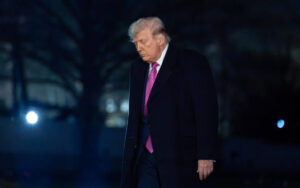
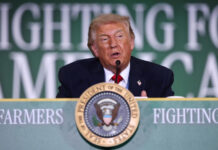
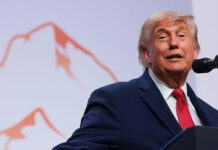
Donald Trump is reportedly considering ending the Iran war without a deal on the Strait of Hormuz – AP Photo/Jose Luis Magana
The world risks plunging into recession as Donald Trump appears to have “lost control” of the Iran war, a City bank has warned.
Major economies face a “real risk of an inflationary recession” if the conflict in the Middle East drags on, according to Peel Hunt, which said it could not rule out higher rates.
Even a swift end to the conflict now would fail to end economic disruption for at least another two weeks, it warned.
The investment bank said a quick resolution to the war had become harder for the US president to achieve. This “increases the risk that the Strait of Hormuz remains blocked even once fighting ends”, it added.
Mr. Trump was considering ending the war without a deal to reopen the waterway, according to the Wall Street Journal, despite its importance as a shipping route for a fifth of the world’s oil and gas exports.
On Tuesday, the US president told Britain and other countries to “go get your own oil” and to take the Strait of Hormuz for themselves to fix the energy crisis triggered by its closure.
Kallum Pickering, chief economist at Peel Hunt, said: “Donald Trump may have lost control of the situation, which makes a quick (unilateral) resolution harder and increases the risk that the Strait of Hormuz remains blocked even once fighting ends.”
He said the energy shock from the war “appears to be spreading from West to East – with shutdowns already in place in parts of Asia and Australia”.
“If Europe is next, this will amplify global recession fears,” he said.
Eurozone inflation jumped from 1.9pc to 2.5pc in March, its steepest rise since 2022, as energy prices surged by 4.9pc off the back of the Iran war, official figures released on Tuesday showed.
The consultancy Capital Economics the risks of a global recession would increase further in the event of attacks by Houthis on shipping in the Red Sea. The Iran backed group joined the war for the first time at the weekend as they fired rockets at Israel.
Mr. Pickering warned: “If the war drags on, there is a real risk of an inflationary recession unfolding in major economies, with central banks struggling to ease policy until inflation risks fade. Rate hikes could not be ruled out.”
Sir Keir Starmer urged businesses to help the Government protect households from soaring prices on Monday. In a Downing Street meeting, he told bosses that “the Government can’t do it on its own”.
British stocks post biggest monthly drop since 2020
British stocks have logged their biggest monthly drop since 2020, as surging oil prices due to fighting in the Middle East have led to widespread concerns about inflation.
The FTSE-100 index of Britain’s leading listed companies has fallen by 5.6pc in March, wiping out almost all the gains made since the start of the year.
At the same time, the FTSE-250 index of mid-cap stocks is also down 9.5pc since the start of the month amid concerns about the economic impacts of the war on Britain’s economy.
The UK is expected to face a worse economic impact from the war in Iran than any other major economy, according to the Organisation for Economic Co-operation and Development (OECD).
Official data from the ONS also confirmed that Britain’s economy barely expanded at the end of 2025, adding to the challenge for the government to keep growth on track this year with the Iran war likely to push up inflation and hit demand.
EU countries should encourage fuel saving measures, Brussels says
The EU Commission has said member states should consider promoting voluntary fuel-saving measures to help stabilise energy markets in the face of disruption due to the war in Iran.
In a letter to the EU’s energy ministers, Dan Jørgensen, the bloc’s commissioner for energy, said member states should consider introducing voluntary measures to cut oil consumption.
Mr. Jørgensen’s letter pointed to policies listed by the International Energy Agency (IEA) to help save fuel, including encouraging car sharing and working from home.
The energy commissioner added that EU countries should be prepared for “prolonged disruption” to energy markets due to war with Iran.
EU countries should also refrain from any introducing any policies that might increase oil consumption, Mr. Jørgensen said.
Iran threatens US tech giants over ‘targeted assassinations’ of leaders
Iran’s Revolutionary Guards have threatened to target American tech companies including Apple, Google and Meta if any more of the country’s leaders are killed in “targeted assassinations” by the US and Israel.
In a post listing 18 American tech companies, the Iranian Revolutionary Guard Corps (IRGC) said it would retaliate against any attacks by targetting the firms.
“These companies, starting from 8:00 pm (1630 GMT) Tehran time on Wednesday, April 1, should expect the destruction of their relevant units in exchange for every assassination in Iran,” the Guards said in a statement listing the names of 18 companies it alleged were complicit in the killing of officials.
“We advise the employees of these institutions to immediately leave their workplaces to preserve their lives,” it added.
The IRGC said tech giants including Microsoft, Palantir, Nvidia, Tesla and Oracle also risk being targetted if the attacks on Iran’s leaders continue.
Supreme leader Ali Khamenei and Revolutionary Guards commander-in-chief Mohammad Pakpour were both killed on the first day of the war on February 28.
Ali Larijani, Iran’s powerful security chief, was separately killed by an Israeli strike on 17th March.
Now brace for an even bigger oil shock
The world has lost over a tenth of its daily oil supply, along with critical volumes of jet fuel, diesel and refined petroleum products. Now prepare for loss of the next tenth, hitting just as all the short-term fixes are exhausted.
This is not a remote tail risk. It is an all-too-plausible outcome as Donald Trump concentrates the 82nd Airborne Division and US marines to “take the oil” on Iran’s Kharg Island.
The supply crisis has already escalated over the last few days in two critical theatres beyond the Strait of Hormuz. Goldman Sachs says investors are buying call options on oil at a strike price of $450 a barrel.
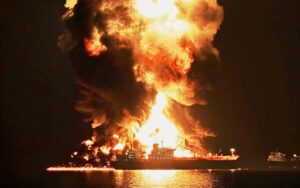
The Gulf conflict has already sent oil prices well above $100 a barrel – AP
Wall Street rallies as US pushes Iran for deal
The main US stock indexes opened higher after signs of a potential end to the war in the Middle East.
The Dow Jones Industrial Average rose 0.9pc to 45,600.62 while the S&P 500 jumped 1.1cp to 6,414.45.
The Iran conflict that has put the S&P 500 and the Dow on track for their biggest monthly decline in years after sending energy prices soaring.
The tech heavy Nasdaq Composite surged by 1.5pc to 21,103.81.
Families face £600 blow from Iran war
Households will be left up to £600 poorer this year as surging prices triggered by the Iran war hit family finances.
Economists warned that slower pay growth had left Britons more vulnerable to a decline in income as official figures showed living standards barely grew in 2025.
Disposable incomes after inflation were broadly flat in the second half of last year, according to the Office for National Statistics (ONS).
US stocks poised to surge on hopes of end to war
Wall Street is on track for a rally at the opening bell after reports that Donald Trump may push for an end to the Iran war without a deal on safe shipping through the Strait of Hormuz.
The Dow Jones Industrial Average, S&P 500 and Nasdaq 100 were all up 1.1pc in premarket trading after the Wall Street Journal reported the US president had told aides he was willing to end his military campaign even if the trade route remained largely closed.
Mr. Trump posted on social media on Tuesday that Britain and other countries needed to “go get your own oil”.
Oil prices surged as the path appeared to clear for the US to walk away from the conflict leaving a shipping crisis in its wake.
Brent crude, the international benchmark, was up 4.3pc and heading towards $118 a barrel.
Cost of filling up surpasses £100 a tank
The cost of filling up a typical diesel family car has surpassed £100 a tank for the first time in more than three years as the economic damage of the Iran war continues to hit households.
The price of a litre of diesel has risen by 40p since the start of the Iran war to 182.77p, according to the RAC.
Meanwhile, the cost of petrol has risen to 152.83p a litre, pushing up the cost of a full tank to £84.
RAC head of policy Simon Williams said wholesale fuel data “points towards the price of petrol potentially stabilising if the cost of oil doesn’t increase further, although diesel still looks likely to rise”.
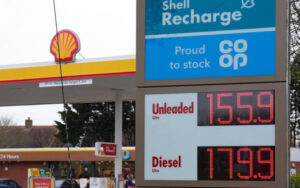
Fuel prices have surged across Britain since the start of the Iran war – Jacob King/PA Wire
Hegseth urges ‘big bad Royal Navy’ to police Strait of Hormuz
Pete Hegseth urged the “big bad Royal Navy” to protect the Strait of Hormuz and clear the path for shipping disrupted by Donald Trumps’ war in Iran.
The US war secretary said the US president had made clear in his post on Truth Social that “it’s not just our problem set going forward, even though we have done the lion’s share of preparation to ensure that strait will be open”.
He told the press at the Pentagon: “There are countries around the world, who ought be prepared to step up on this critical waterway as well.
“It’s not just the US Navy. Last time I checked, there was supposed to be a big bad Royal Navy that could be prepared to do things like that as well.
“He is pointing out that this is an international waterway that we use less than most.”
Hegseth: Iran wise to cut a deal
The US secretary of war has said that if Iran is wise, it would “cut a deal” to end the conflict in the Middle East.
Pete Hegseth told a press briefing at the Pentagon on Tuesday that the US has more options than Iran, adding that the next few days would be decisive.
He said he had visited troops in the Middle East on Saturday to witness the military operation against Iran.
“We have more and more options, and they have less … in only one month we set the terms, the upcoming days will be decisive,” Mr. Hegseth said.
“Iran knows that, and there’s almost nothing they can militarily do about it.”

US secretary of war Pete Hegseth said Iran would be wise to make a deal on the war – REUTERS/Jonathan Ernst
Oil jumps as Trump tells UK to take Hormuz
The price of oil has risen as Donald Trump said Britain and other countries would have to “go get your own oil” following his war in the Middle East.
Brent crude, the international benchmark, was up 3pc to more than $116 a barrel as the US president signalled it would be up to other countries to secure their energy needs.
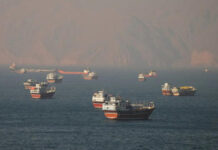
The Strait of Hormuz, where a fifth of the world’s oil and gas exports usually pass, has been effectively closed by Mr Trump’s war with Iran.
The Wall Street Journal reported overnight that the US president have told aides that he was prepared to end the war without a deal to reopen the vital trade route.
Investment bank Peel Hunt said on Tuesday that Mr Trump appeared to have “lost control” of the conflict, which has entered its fifth week.
Stocks rose after the President’s post on Truth Social, with the FTSE 100 up 1pc and the Dax in Germany up 0.8pc.
Trump tells Britain: Go get your own oil
Donald Trump told Britain to “go get your own oil” as the economy reels from the energy crisis caused by the Iran war.
The US president urged the UK to “buy from the US, we have plenty” as supplies are choked off by the closure of the Strait of Hormuz.
In a thinly veiled swipe at Sir Keir Starmer, Mr. Trump also urged Britain and other countries to “build up some delayed courage, go to the Strait, and just TAKE IT”.
He posted on Truth Social : “You’ll have to start learning how to fight for yourself, the USA won’t be there to help you anymore, just like you weren’t there for us.
“Iran has been, essentially, decimated. The hard part is done. Go get your own oil!”
Consumers ‘more resilient to energy shocks’
Bank of America said consumers today are “more resilient to energy shocks” than in the past as households have become more fuel efficient.
The Wall Street bank said energy goods and services accounted for just 3.7pc of consumer spending in January this year.
By contrast, the figure stood at 5.6pc before Iraq invaded Kuwait in 1990.
US economist Aditya Bhave said: “So while we remain vigilant to downside risks from the Iran war, e.g. broad-based supply disruptions, it helps that the economy has become much more energy-efficient over time, making it more resilient to energy shocks.”
Houthis entering Iran war risks ‘global recession’
Attacks by Houthis on vessels in the Red Sea would risk a “global recession” as they choke off vital supplies of oil, economists have warned.
At the weekend, the Iran-backed militia fired rockets at Israel for the first time since the start of the Iran war, riaisng concerns about attacks on shipping.
The Houthis caused major disruption to shipping in the Red Sea in 2023 and 2024 as they targeted vessels heading for the Suez Canal in a show of support for Hamas.
Capital Economics said this posed “significant” consequences for Asian economies that rely heavily on oil imports from Saudi Arabia.
The Bab el-Mandeb Strait on the southern coast of Yemen has become an important release valve for the pressured oil market, as the effective closure of the Strait of Hormuz has caused Saudi Arabia to divert oil via its East-West pipeline to export from the Yanbu port, which sits on the Red Sea.
Senior global economist Ariane Curtis said: “The bigger threat to the global economy would be via higher oil prices.
“An effective closure of the Bab el-Mandeb Strait would push us closer to our ‘adverse’ macro scenario for the war, in which the slowdown in global GDP growth is sufficient to meet most definitions of a global recession.”
Reform to abolish air passenger duty if it wins election
Reform would abolish air passenger duty on short-haul flights if it wins the next election, its economic spokesman Robert Jenrick said.
His party leader Nigel Farage told an event at Heathrow Airport it would be a “Brexit benefit”, and he had been an MEP when it was first introduced.
Mr Jenrick, who defected from the Conservative Party earlier this year, dubbed air passenger duty the “family holiday tax”.
He said it would save families £45 on international flights, or £48 in the UK.
The policy announcement comes as airlines have warned of impending price rises as the Iran war has sent the cost of jet fuel to record highs.
Mr. Jenrick said: “This is a time of year where millions of Brits will be going on holiday, catching some sun in Majorca or Tenerife, and millions more will be sat at home over the Easter holidays thinking about booking a family holiday. And this year, of all years, that will be a tough decision because household finances are just so tight, and so we want to make it cheaper.”
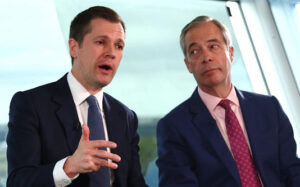
Robert Jenrick, left, announced Reforms plans to abolish air passenger duty on short-haul flights alongside Nigel Farage – Peter Nicholls/Getty Images
Starmer to chair Cobra meeting on energy crisis
Sir Keir Starmer will chair a Cobra meeting as household bills are expected to soar as a result of the war in Iran.
Average energy bills are forecast to rise by almost £300 from July while motorists are already counting the cost of the war, with drivers paying £544m extra for fuel since the US-Israeli bombing campaign began.
The Prime Minister said the Cobra meeting on Tuesday afternoon will look at “making sure that everything that we need to have in place” to respond to the crisis is set up.
Iran’s selective blockade of the vital oil and gas shipping route the Strait of Hormuz and its attacks on the Gulf states has pushed up global energy prices.
In the latest sign of the risk to shipping in the region a Kuwaiti oil tanker was attacked off the coast of Dubai.
Chancellor Rachel Reeves has already indicated that targeted help for poorer households could be available if bills continue to rise, with particular worries in Government about the impact in the autumn when energy use increases as temperatures drop.

Sir Keir Starmer will chair a Cobra meeting on the energy crisis – Wiktor Szymanowicz/Future Publishing via Getty Images
Iran war ‘a shambles of the highest order’
Donald Trump will walk away from the Iran war and leave Britain and Europe to “our own sorry devices”, Telegraph readers have warned.
Stocks climb over hopes for swift end to war
The FTSE 100 and European stocks climbed over hopes that the Iran war could come to a swift end.
The UK’s flagship stock index and Germany’s Dax rose as much as 0.9pc, with the Cac 40 in Paris up as much as 0.8pc after reports Donald Trump is considering an abrupt end to the conflict.
The US president told his aides said he is willing to end the US campaign in the Middle East, even without a deal on reopening the Strait of Hormuz, according to the Wall Street Journal.
Kevin Thozet, a member of the investment committee at Carmignac, said: “One can’t exclude a swift resolution, but it won’t mean going back exactly to where we were in February.
“Investors are seeing the glass half-full. During the past 15-years or so, buying the dip has been absolutely the key.”
Italy prepares to keep coal power stations open for another decade
Italy has delayed its plan to close its coal-fired power stations by more than a decade, as the Iran war drives up oil and gas prices.
In a significant reversal, the country will now continue to burn coal in at least one, and possibly up to three, power generation plants until 2038.
Italy’s move comes as countries around the world, including Japan, South Korea and Germany, are turning back to coal to alleviate the spiralling energy crisis.
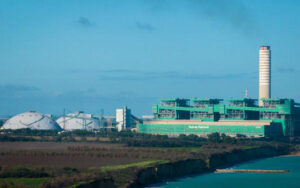
Italy’s largest coal-fired plant, Enel’s Federico II in Cerano, is one of the three stations still operating last year – Manuel Romano/NurPhoto via Getty Images
Eurozone inflation surges as Iran war pushes up petrol prices
Inflation across the eurozone surged this month as the conflict in the Middle East pushed up the price of fuel.
The consumer prices index across the bloc jumped from 1.9pc in February to 2.5pc in March, according to initial estimates by official body Eurostat.
It was fractionally lower than the 2.6pc that had been predicted by analysts, even as energy prices surged by 4.9pc.
Tories criticise ‘mad plan’ to shut down North Sea
The Tories have denounced Sir Keir Starmer’s “unforgivable” net zero policies ahead of a predicted rise of almost £300 in energy bills this summer.
Cornwall Insight has predicted that Ofgem’s price cap will rise to £1,934 in July from the April cap of £1,641, which comes into effect on Wednesday.
Were the forecast to prove correct, the price cap would soar to its highest level since July 2023, when costs had surged following the Russian invasion of Ukraine.
Claire Coutinho, the shadow energy secretary, said: “It is unforgivable that Labour are continuing with Ed Miliband’s mad plan to shut down our own energy supplies in the middle of an energy crisis.
“Shutting down the North Sea means we are losing out on £25bn in tax receipts that we could use to cut bills and reduce the cost of living.
“The Government must adopt the Conservatives’ Cheap Power Plan to cut bills by £200 immediately by taking VAT, taxes and levies off energy bills without costing taxpayers a penny. We would cut bills for everyone rather than taxing working people to fund yet another bailout for people on benefits.”
World risks recession as Trump has ‘lost control’ of Iran war, warns City bank
Donald Trump appears to have “lost control” of the Iran war and left the world at risk of a recession, a City bank has warned.
Peel Hunt said it expected at least two more weeks of disruptions from the Iran war, even in the event of a swift resolution to the conflict.
The investment bank said a quick unilateral resolution to the war had become harder for the US president, which “increases the risk that the Strait of Hormuz remains blocked even once fighting ends”.
Mr Trump was considering ending the Iran war without a deal to reopen the waterway which carries a fifth of the world’s oil and gas exports, according to the Wall Street Journal.
Kallum Pickering, chief economist at Peel Hunt, said: “Donald Trump may have lost control of the situation, which makes a quick (unilateral) resolution harder and increases the risk that the Strait of Hormuz remains blocked even once fighting ends.”
He said the energy shock from the war, “appears to be spreading from west to east – with shutdowns already in place in parts of Asia and Australia”.
“If Europe is next, this will amplify global recession fears,” he said.
He also questioned traders’ bets that the energy shock will lead to central banks around the world raising interest rates, as they did after Russia’s invasion of Ukraine in 2022.
He said: “Today’s environment is different: demand is weaker, fiscal policy is tighter, and both financial and monetary conditions are more restrictive. These factors increase the risk of recession, combined with a smaller – though still serious – inflation spike.”
Energy bills ‘to rise by £288 from July’
Average annual energy bills will rise by £288 from July as the Iran war pushes up prices, analysts have warned.
Cornwall Insight has forecast that households will pay £1,929 a year for electricity and gas under the next Ofgem price cap.
From Wednesday, bills will drop to £1,641 under the cap, which was set before the Middle East conflict began.
Cornwall Insight’s latest estimate is £44 lower than its previous prediction on March 19, but still represents an 18pc jump from the end of June.
Principal consultant Dr Craig Lowrey said: “Over a month into the Middle East conflict, energy markets are experiencing the kind of volatility not seen since 2022.
“While prices may have calmed a little over the past few days, prior to the conflict our forecasts pointed to a relatively stable price cap through the summer, now we are forecasting rises of 18pc.
“With Ofgem’s price cap announcement just weeks away, infrastructure damage and continued disruption to marine traffic through the Strait of Hormuz are limiting the potential for any meaningful wholesale price fall. As a result, some of the increase is already effectively baked in. A rise in July is pretty much unavoidable, but how high prices go remains to be seen.”
Treasury making extra £20m a day from higher oil and gas prices
Rachel Reeves’s deputy has admitted the Government stands to make an extra £20 million a day through taxes linked to oil and gas prices.
Analysis has suggested that the Treasury could bring in an extra £8bn if fuel prices remained at their current levels for the coming year.
Asked on whether he recognised the figure, James Murray, the Chief Secretary to the Treasury, told LBC: “Yes, but look–”
It was then put to Mr Murray that the Treasury was “making an extra £20 million a day as businesses go to the wall”.
He responded: “Let me make an important point here. If the VAT receipts from energy increase that can often be because people are spending less money on other goods and items. And that means that overall where people pay VAT shifts from other items over to energy and fuel.
“Now because energy and fuel are typically at 5 per cent rather than the standard 20 per cent that can actually mean revenue goes down. So it’s not quite as straightforward as you put out.”
Mr. Murray insisted the Government had “already taken decisions” to bring down the cost of living. Asked what he was doing with the extra £20m a day, he said: “You know that’s not how it works.”
Go about your lives as normal, says minister
The Chief Secretary to the Treasury said the Government was not encouraging personal rationing amid the Iran war and “people should go about their lives as normal”.
Asked if the Government should encourage personal rationing, James Murray told BBC Radio 4’s Today programme: “No, I think people should go about their lives as normal knowing that the Government is taking action to bring energy bills down.”
The Ealing North MP said: “The Prime Minister and the Chancellor are working through contingency plans so that we are prepared for the future and in the longer run over time, the focus that we’ve got on new nuclear power, new wind power, solar power, all of that is really important to giving us more energy independence in the future.”
Mr. Murray added: “We know that we have a declining basin in the North Sea, and so the important thing for us is to make sure we’ve got the transition to be carried out in the right way.
“So we know that oil and gas will play an important role for years to come. We know that we have to shift to renewables, but we have to support the production in the meanwhile.”
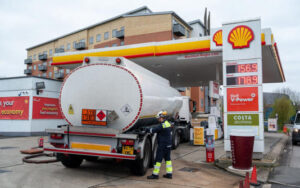
A petrol tanker delivery at a Shell petrol station in Slough – Maureen McLean/Shutterstock
Stocks fall after Iran war inflation blow
European stocks fell at the open as official data showed inflation surged in March as a result of the Iran war.
The Cac 40 in Paris dropped by 0.2pc in early trading after the consumer prices index in France jumped from 0.9pc to 1.7pc during this month.
Statistics agency Insee said the rise was mainly a result of higher petrol prices.
In Germany, the Dax fell 0.3pc, leaving it on course for its worst month since June 2022.
The continent wide Stoxx 600 fell 0.1pc and was on track for its sharpest monthly decline since 2020 amid supply-chain disruptions.
Economy limps into 2026 ahead of Iran war
Britain’s economy limped into 2026 before the turmoil caused by the Middle East conflict, according to official figures.
The Office for National Statistics (ONS) confirmed on Tuesday that the UK’s gross domestic product (GDP) rose by 0.1pc in the final three months of last year.
It followed growth of 0.1pc in the third quarter of the year.
The ONS increased it calculation of growth for the whole of 2025 to 1.4pc, up from previous growth of 1.3pc.
Director of economic statistics Liz McKeown said: “Our latest figures show GDP was unrevised in the last quarter of the year, with the economy growing a little.
“Services showed no growth, while production grew strongly, partially offset by a weak quarter from construction.”
An HM Treasury spokesman said: “In an uncertain world we have the right economic plan. The decisions we have taken have put us in a better position to protect the country’s finances and family finances from global instability.
“We were the fastest growing European economy in the G7 last year and now we’re going even further by using regional growth, AI and a closer relationship with the EU to get our economy growing.”
Reeves right not to cut fuel duty, says minister
A minister has defended Rachel Reeves’s decision not to cut taxes on fuel in response to the war in Iran.
James Murray suggested it was already enough for the Government to extend a temporary 5p cut in fuel duty until September, a decision taken before the conflict.
Mr. Murray, the Chief Secretary to the Treasury, was asked why Ms Reeves had not followed Portugal, France and Spain in cutting VAT or excise duty on fuel.
He told LBC’s Nick Ferrari: “Fuel duty is already being kept down because of the 5p cut being extended to September. We knew at the Budget last year and we have known since we came into office that the cost of living is a top priority for people in this country.”
Asked why the Government was “doing nothing”, Mr Murray responded: “We’re not doing nothing… What is happening in the Middle East makes the decisions we have taken to help people with the cost of living even more important.”
French inflation surges as Iran war drives up prices
The rate of inflation in France surged in March as the Iran war has pushed up the price of energy.
The consumer prices index jumped from 0.9pc to 1.7pc during the month as the cost of filling up a tank surged, according to statistics agency Insee.
FTSE 100 rises at the open
The FTSE 100 edged higher at the start of trading over hopes the Iran war could end soon.
The UK’s flagship stock index edged up 0.3pc to 10,155.20 after reports Donald Trump is considering bringing an end to the Middle East conflict, even without a deal on the Strait of Hormuz.
The mid-cap FTSE 250, which is more focused on the UK economy, rose by 0.5pc to 21,062.34.
Iran war ‘clouds outlook’ for housing market
The conflict in the Middle East has created uncertainty for Britain’s housing markets, Nationwide has warned.
The impending surge in energy prices is “clouding the outlook” for house prices, which the lender said rose by 2.2pc in the year to March.
Markets have begun pricing in rapid increases in interest rates by the Bank of England this year as a result of the Iran war, which threatens to drive up inflation. Higher interest rates dampen mortgage demand by increasing borrowing costs.
Nationwide’s chief economist Robert Gardner said: “The pickup in house price growth suggests that the market had regained momentum after the slowdown recorded around the turn of the year.
“However, the sharp rise in global energy prices in response to developments in the Middle East represents a significant shock to the global economy, clouding the outlook.”
House prices jump by 0.9pc in March compared to February, Nationwide said, which was the fastest jump since December 2024.
It took the average value of a UK home to £277,186.
Mr Gardner added: “In the near term, UK economic growth is likely to be slower and inflation higher than previously expected, although ultimately the impact will depend on the duration of the shock as well as the policy response.
“The outlook for interest rates is particularly uncertain and dependent on whether the demand or supply side of the economy is more adversely affected.”
Oil flat despite strikes overnight
The price of oil was little changed despite strikes against Iranian targets and on civilian vessels in the Middle East.
Brent crude was flat at $113 a barrel as the market digested “competing headlines” about the war.
An Iranian drone hit a Kuwaiti oil tanker in Dubai waters, sparking a blaze that was later put out, the Dubai Media Office said.
Meanwhile, the US struck a large Iranian ammunition depot with 2,000-pound bunker buster bombs. Donald Trump shared footage of the large-scale attack.
The attacks were in contrast to the Wall Street Journal report that Donald Trump was considering a swift end to the war.
Jim Reid, an analyst at Deutsche Bank, said the oil market had faced “mixed signals” overnight, although the US pushing to end the war was seen as “more positive”.
“So even though the Strait of Hormuz wouldn’t return to normal in that scenario, markets still took the report positively, because it raised the perceived probability that the conflict might soon end, avoiding the more escalatory scenarios like further damage to energy infrastructure,” he said.
Stocks slumped after Donald Trump was reportedly considering ending the Iran war without a deal on reopening the Strait of Hormuz.
Asian shares fell heavily as the US president’s aides told the Wall Street Journal he was willing to end his campaign in the Middle East even without an agreement on reopening the waterway.
US-produced West Texas Intermediate oil has risen above the psychological $100 a barrel mark in recent days amid the ongoing closure of the strait, where a fifth of the world’s oil and gas exports pass.
Meanwhile prices at the pump in the US have exceeded $4 a gallon, heaping pressure on the Trump administration as the mid-term elections approach later this year.
“This will be hurting the Trump administration,” Will Walker-Arnott of wealth manager Raymond James told BBC Radio 4’s Today programme.
“Markets continue to gyrate. The Trump administration continues to vacillate and so there is continued uncertainty in the markets.”
Macquarie warned last week that an extended Iran conflict could send oil to $200 a barrel later this year, while BlackRock boss Larry Fink said oil at $150 would trigger a global recession.
Brent crude oil, the international benchmark, was little changed at around $113 a barrel on Tuesday.
However, stocks fell heavily in Asia overnight, given the region’s reliance on the Middle East for its energy needs.
South Korea’s benchmark index fell 4.3pc and the Nikkei in Japan dropped by 1.6pc. Here is what you need to know.
What happened overnight
Oil steadied and Asian stocks fell after Donald Trump’s aides said the US president was considering bringing an end to the Iran war without a deal on the future of the Strait of Hormuz.
Tokyo’s Nikkei 225 was down 1.2pc to 51,245.50. The war has wiped out all its gains made from the beginning of the year.
South Korea’s Kospi lost 3.4pc to 5,097.11. Hong Kong’s Hang Seng was down 0.5pc to 24,624.55, while the Shanghai Composite index fell 0.4pc to 3,908.28.
Taiwan’s Taiex was trading 2.2pc lower.
With the Iran war in its fifth week, attacks in the Middle East continued and there was still no clear end to the war. Brent crude was trading at around $113 a barrel on Tuesday, while benchmark US crude edged up to $103.
Oil prices have surged in March with Brent crude prices rising more than 40pc since the start of the Iran war.
On Tuesday, a drone hit a Kuwaiti oil tanker in Dubai waters and caused a fire. The US’s Gulf allies were privately making a case to the White House that Iran has not been weakened enough, officials said, and were urging Mr Trump to keep fighting.
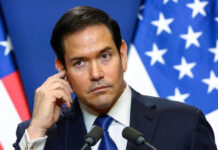
Maritime traffic disruptions at the Strait of Hormuz, where roughly a fifth of the world’s oil normally passes through, remains the pain point for global energy supplies. US Secretary of State Marco Rubio said Trump has “options available” in response to Tehran’s threats to control the strait, after Iran was said to have effectively created a “toll booth” there.
Wall Street stocks were mixed on Monday. The S&P 500 dropped 0.4pc to 6,343.72, the Nasdaq Composite lost 0.7pc to 20,794.64, while the Dow Jones Industrial Average added 0.1pc to 45,216.14.
Courtesy/Source: The Telegraph