

























































































MAY 19, 2026
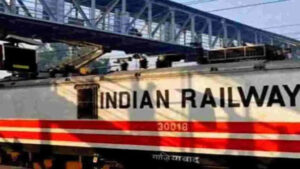
In a major financial blow to the national transporter, the Supreme Court has ruled that the Indian Railways is not a “deemed distribution licensee” under the Electricity Act, 2003, and thus liable to pay Cross-Subsidy Surcharge (CSS) and Additional Surcharges (AS) on all units of electricity consumed by an open access arrangement, similar to any other industrial unit.
In its ruling on May 8, a bench of Justice Dipankar Datta and Justice Satish Chandra Sharma dismissed eight statutory appeals by the railways and upheld the order dated February 12, 2024 passed by the Appellate Tribunal for Electricity.
The financial toll of this verdict on the railways is expected to be astounding.
Indian Railways is one of the biggest electricity users in the country, with an annual consumption of over 33 billion units. The annual liability, therefore, can run into several thousand crores, not to mention the backdated dues with CSS ranging from Rs 0.50 to Rs 2.5 per unit, depending on the state.
The court has asked state DISCOMs (power distribution companies) to calculate the outstanding surcharge “disaggregated” according to the area of supply and the period of availing open access and bill the railways. Internal railway estimates peg that figure to be at least Rs 15,000 crore.
The legal irony in the judgment is especially biting on the government. The railways, a central government entity, had been contesting since 2015 that it is not liable to pay surcharges on electricity drawn directly from the grid as it is a “deemed distribution licensee” under relevant guidelines. The strategy was drawn out of a letter issued by the Union ministry of power in 2014, which had held that railways as deemed licensee and Section 11 of the Railways Act, 1989, provided powers to the railway administration to install and maintain power supply and distribution installations.
But one by one, the Supreme Court knocked down the national transporter’s claims. Only the running of an internal power network to provide power to locomotives, signals and to station facilities was considered by the bench to be the “distribution” as referred to in the Electricity Act. Two things are required of a distribution licensee by the Act: to maintain a distribution system and to provide electricity services to third party consumers. In the case of railways, however, all units they buy are used by them. All overhead equipment and traction substations are an “internal conveyance system” and not a “public distribution system”.
Mohammad Jamshed, a former Railway Board member (traffic) and currently a distinguished fellow at the independent think-tank Chintan Research Foundation, said the court order has the potential to wipe out the savings railways achieved through electrification. “This judgment is not merely a landmark legal pronouncement; it also carries enormous financial implications. It effectively overturns a major policy initiative launched around 2015 that was intended to generate electricity cost savings exceeding Rs 41,000 crore over a decade,” Jamshed said.
The railways has spent around Rs 46,000 crore since FY14 to electrify 68,000 km of tracks, achieving almost complete electrification of its broad-gauge network by end of FY26. This makes it one of largest electric railways in the world. The strategy: lower fuel expenses, deliver with less emissions than diesel, and avoid the risk of oil price variability. However, for every electrified km, there is more demand on open-access markets where each unit comes with a premium.
Courtesy/Source: India Today / PTI