





















































































MARCH 9, 2026
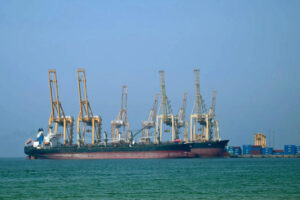
This June 23, 2025 photo shows tankers at the Khor Fakkan Container Terminal, one of the major container ports in the Sharjah Emirate, along the Strait of Hormuz, transit point for one-fifth of global oil output.
China’s Foreign Ministry on Monday renewed its call to restore energy flows through the Strait of Hormuz, as shipping entered a second weekend of near‑paralysis amid the U.S.–Israeli war with Iran.
Why It Matters
The crisis highlights the strategic importance of the chokepoint, a transit route for more than a quarter of the world’s seaborne oil.
While as much as half of China’s oil imports pass through the strait, the country is less exposed to the shock than its neighbors. Still, a prolonged disruption would force the country to draw on its vast strategic reserves and rely more heavily on alternative sources.
Newsweek reached out to the Chinese and Iranian foreign ministries by email with a request for comment.
What To Know
“Energy security is of paramount importance to the global economy, and all parties bear responsibility for ensuring stable and uninterrupted energy supplies,” Chinese Foreign Ministry spokesperson Guo Jiakun said Monday when asked whether Beijing would join G7 discussions about a coordinated release of strategic petroleum reserves.
“China will take necessary measures to safeguard its own energy security,” Guo added, referring reporters to the country’s “relevant authorities” for details.
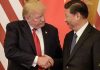
China has repeatedly called for unimpeded tanker access through the strait, citing its importance to global trade, and Chinese officials have been holding talks with Iran about resuming safe oil passage, according to media reports last week. At the same time, Beijing has avoided directly blaming Tehran and has repeatedly condemned the U.S.-Israeli offensive as a violation of international law.
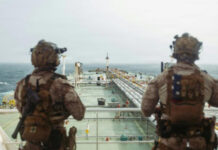
Iran’s Revolutionary Guard has warned it could “set ablaze” Western tankers attempting to pass through the waterway, and several vessels have reportedly been struck or targeted since fighting began.
Iranian authorities have not explicitly forbidden Chinese‑flagged vessels from transiting, but the risk of potential targeting and sky‑high insurance premiums is likely giving operators pause. More than 200 tankers and commercial vessels, including over 50 Chinese-flagged ships, are reportedly waiting near the Strait of Hormuz amid the security risks and sky-high insurance premiums.
Brent crude surged to nearly $120 per barrel on the conflict Monday and remained between $101 and $107 in late trading.
What People Are Saying
Sarah Emerson, senior associate for the Center for Strategic and International Studies think tank’s energy security and climate change program, said in a Friday analysis: “Iran’s crude stocks stored at sea are currently about 155 million barrels, which suggests Iran has about 100 days of exports already outside of the Strait of Hormuz.
“Given the distance of Iran from China, Iran will eventually need to replenish those stocks. They cannot do that if the strait is closed or if their own oil infrastructure is destroyed in retaliation for their attacks on oil facilities and flows.”
What Happens Next
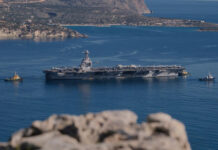
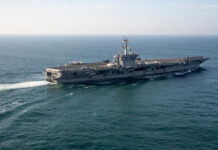
U.S. Energy Secretary Chris Wright said Friday that the U.S. Navy was preparing to escort commercial vessels through the Strait of Hormuz “as soon as it’s reasonable to do it,” without providing further details.
Courtesy/Source: Newsweek