
































































MARCH 6, 2026

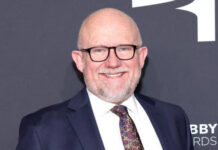
Dubai businessman Khalaf Al Habtoor criticized the U.S. attacks on Iran in a rare break of cautious public statements by the Emirati elite. – Omar Albam/Associated Press
Last year, the richest countries in the Persian Gulf pledged to pump trillions of dollars of investment into the U.S. in a bid to charm President Trump and strengthen ties.
Today that warm financial embrace is suddenly under stress.
“Who gave you the authority to drag our region into a war?” prominent Dubai businessman Khalaf Al Habtoor asked Trump in a post on X Thursday. The president, he said, placed the Gulf states “at the heart of a danger they did not choose.”
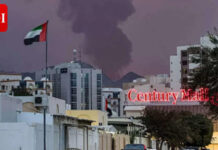
As Iran retaliates to U.S. attacks by raining missiles and drones on its Arab Gulf neighbors, the prospect of sustained turmoil in the energy-rich states stands to upset an increasingly profound economic relationship.
Before the war broke out, the United Arab Emirates, Saudi Arabia and Qatar had been behind a surge of U.S. investment, publicly embracing Trump closer than any U.S. president in recent history through use of their deep pockets.
The three countries’ massive pledges—over $3 trillion between them—were used by Trump to demonstrate a flood of investment coming to the U.S. The countries had become go-to sources of funding for various Trump priorities ranging from AI initiatives to a rebuilding plan for Gaza.
The conflict “raises new questions about the Gulf countries’ capability and interest in investing in the U.S.,” said Rachel Ziemba, an adjunct senior fellow at the Center for a New American Security, a Washington-based think tank.
If it persists, Ziemba said, the conflict could shake up the countries’ own finances—reducing revenue from oil and gas while prompting them to spend more on defense. The result could mean less cash to splash abroad.
The post by Al Habtoor, a Dubai billionaire who runs the Al Habtoor Group, marks a rare break of cautious public statements from the Emirati elite. The entrepreneur founded what was a tiny engineering firm in 1970, building it up to become a large conglomerate that spans from luxury hotels to car dealerships to publishing.
A spokesman for Al Habtoor didn’t respond to requests for comment.
The governments of the U.A.E., Saudi and Qatar have directed their criticism at Iran, protesting the attacks on their airports and ports as violations of sovereignty that threaten civilian lives. But before the U.S. launched its airstrikes, the Gulf governments had been resisting the prospect of a U.S. attack, fearing that it could provoke a regional conflict that would envelop them.
“State-sponsored Iranian terrorism didn’t just harm America and Americans, but our allies—including other Gulf nations,” a White House spokesman said. He added the operation “only safeguards regional stability and commerce in the region.”
Soon after arriving back in the White House last year, Trump found willing partners in the Gulf monarchies. His first major foreign trip was in a spring 2025 visit to the three states, where pledges of investment were sandwiched between grandiose welcomes on red and lavender-colored carpets and splashy dinners.
Since, financial dealings with the Gulf have only grown, such as a planned Disneyland theme park in Abu Dhabi and the donation of a jumbo jet from Qatar.
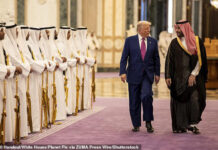
A slew of deals were discussed at the U.S.-Saudi Investment Forum in Washington, D.C. in November, where Trump touted the strong partnership with Saudi Arabia.

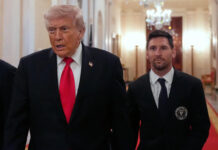
President Trump and Crown Prince Mohammed bin Salman at the U.S.-Saudi Investment Forum in November. – Evan Vucci/Associated Press
Businesses including private-equity firm Blackstone and software maker Cisco Systems pledged investments in data centers around the Gulf.
Trump’s family business and close associates have struck a number of deals there, too, raising money for crypto and private-equity ventures. Trump-branded residential towers and luxury golf courses are poised to appear in Qatar, Jeddah, Riyadh and Dubai.
The Gulf countries’ sovereign-wealth funds have been behind a series of high-profile acquisitions of giant companies, including the Saudi-backed $55 billion buyout of videogame maker Electronic Arts and an Abu Dhabi fund’s deal to acquire advertising company Clear Channel Outdoor Holdings. Funds from all three countries had backed Paramount Skydance’s effort late last year to acquire Warner Bros. Discovery.
Just how the conflict might affect the flow of money depends on how it unspools, but economists have begun to downgrade their forecasts for the region.
Capital Economics said in a note to clients on Thursday that it would cut its gross domestic product growth forecasts for the Gulf region by up to 1 percentage point, assuming the conflict lasts only a few weeks. The uncertainty may prompt firms to delay major investment decisions, Capital Economics said.
Some investors are betting it will all calm down, soon enough. Blackstone President and Chief Operating Officer Jon Gray said in a CNBC interview earlier this week: “My gut here is this will ultimately get resolved. The U.S. and its allies will emerge victorious.”
Courtesy/Source: WSJ