













































































NOVEMBER 10, 2026
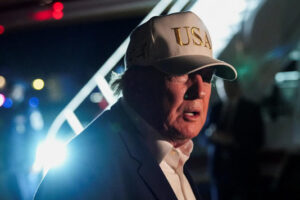
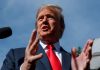
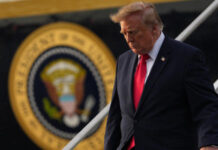
President Donald Trump speaks to the media before boarding Air Force One en route to Joint Base Andrews, Maryland, at President Donald J. Trump International Airport in West Palm Beach, Florida, US, November 8, 2026. – Eric Lee, REUTERS
WASHINGTON, D.C. − President Donald Trump cast doubt on the results of the midterm election, pushing unsubstantiated accusations of rigged election machines in a social media post after previously accepting the blowout defeat for Republicans.
Like he has in previous elections, Trump on Nov. 9 reverted to making baseless assertions of voter fraud to explain last week’s midterm triumph for Democrats.
“Does anybody really believe that this ‘Election’ was honest,” Trump said in a post on Truth Social. “How could the Polls be so wrong??? Some early voting ‘dumps’ were so large that it was impossible to win, no matter how many people went to vote. It’s all about the machines, which are far more important than the voter!”
Despite Trump suggesting midterm polls were “wrong,” the vast majority of public surveys forecast a midterm blue wave. It turned into a tsunami that resulted in Democrats taking control of the House and Senate, flipping double-digit Republican House districts, and winning Senate races in historically Republican states such as Texas, Kansas and South Carolina.
Election officials across the country have also not raised major concerns about early-voting discrepancies or voting machines in the 2026 races. Trump’s accusations come as Republican officials oversee elections in many of the reliably red states where Democrats found success for the first time in decades.
Trump, asked later whether he believes the election was rigged, told reporters at a briefing, “I think the numbers were terrible in terms of those early votes.” Democrats have outperformed Republicans significantly in recent elections with votes cast early or by mail, while Republicans tend to do better in Election Day voting.
Trump also accused Democrats of “fraudulently” recruiting a candidate with the same name as Republican Sen. Dan Sullivan of Alaska to peel votes from the incumbent senator. Democrat Mary Peltola currently leads Sullivan by less than 1 percentage point ‒ a difference of 637 votes ‒ in a race in which the second Sullivan received 3,600 votes. Another Republican candidate, Gerald Heikes, received nearly 5,000 votes.
Alaska uses a ranked-choice voting system in which voters rank candidates in order of preference. A candidate must get more than 50% of the vote to win. If they don’t, more rounds of counting votes takes place until there’s a winner. In this race, the ranked-choice tally wouldn’t start until Nov. 18 under state law.
“They stole it,” Trump said, accusing Democrats of confusing Alaska voters. “And that election should be called right now, because Dan Sullivan won easily if you add up the numbers.”
Trump has a long history of denying election results when he or other Republicans lose and alleging voter fraud without evidence. Most notably, he worked to overturn his 2020 election loss to Joe Biden after making groundless voter-fraud claims, which came before the Jan. 6, 2021 storming of the U.S. Capitol by Trump supporters. He refuses to accept the 2020 defeat to this date.
In other interviews since last week’s midterm election, Trump has acknowledged the sweeping defeat for his party, which has been widely interpreted by political observers as a forceful repudiation of Trump’s second term, particularly over his handling of the economy and the war in Iran.
On the night of the Nov. 3 midterm election, Trump told The New York Times he was “absolutely willing” to accept the result of the midterm elections and said he looked forward to “working with” Democrats in Congress.
In an interview with CBS’ “60 Minutes” that aired on Nov. 8, Trump also acknowledged the election defeats of Republicans, arguing they struggled because he wasn’t on the ballot and because of the Iran war.
“I think if I was on the ballot it would have been a much different situation,” Trump said. “But there’s something beyond that. They didn’t like the war. They didn’t like the fact that gasoline went up.”
Courtesy: This article originally appeared on USA TODAY