

























































































OCTOBER 12, 2025
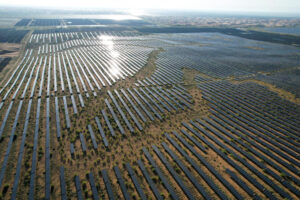
The real winners on clean energy. – Pedro Pardo/AFP/Getty Images
As President Donald Trump pressures world leaders to abandon the energy transition in favor of a U.S.-led fossil fuel resurgence, the status of India’s gas-fired power plants helps explain why his pitch isn’t getting much traction.
Half of that fleet in India is sitting idle. Although electricity demand is exploding, and the plants are designed to run for decades into the future, Indian officials have turned away from them. Their calculation: that renewable energy provides a cheaper and more reliable alternative.
“And you don’t have to depend on overseas nations for fuel,” said Sumant Sinha, CEO of ReNew, one of India’s largest renewable energy companies.
Last week, the International Energy Agency (IEA) nearly halved its forecast of renewable energy growth in the United States, citing the end of tax incentives and other recent policy shifts. Tens of billions of dollars of manufacturing projects to build solar panels, batteries, charging stations and other clean technologies have already been canceled, with hundreds of billions of dollars of additional announced investments imperiled.
But even as U.S. political forces are working against the energy transition, economics are propelling it forward globally. While Trump brands renewables as a “green energy scam,” other countries are pivoting to solar and wind because dramatic price reductions have made them the cheapest options.
As a result, by next year, renewables are expected to overtake coal as the largest global source of electricity, part of what the United Nations calls an irreversible “tipping point” for clean energy adoption. The scale of uptake stands as one of the few climate-related bright spots since countries struck the Paris agreement a decade ago with the goal of limiting global temperature rise.
“No one can stop the energy transition — no one. No country, no person,” said Francesco La Camera, the director general of the International Renewable Energy Agency.
What’s propelling global growth
China and India are key drivers of this trajectory. While both nations continue to build coal plants, renewables are growing much faster and coal use is expected to peak in the next few years, followed by steady declines.
China recently announced a target to cut greenhouse gas emissions and said it would add roughly enough solar and wind energy to power 200 million homes every year until 2035. Already, the amount of wind and solar power under construction in China last year was twice as much as in the rest of the world combined, according to Global Energy Monitor.
But other countries, too, are finding that economic development no longer requires heavy reliance on fossil fuels. Brazil is now generating more power from solar than Germany. Pakistan, over six years, has imported solar panels at such volume that their capacity equals that of the national electricity grid. Countries across Africa, where hundreds of millions lack a grid connection, are lighting homes and businesses and medical clinics with Chinese-made solar panels at a record scale. Oil-rich Nigeria is even installing a solar mini-grid at its presidential villa — a way to work around persistent power outages.
“I don’t see it as a scam. In fact, it has saved lives. It has improved industry,” said Melvin Sackie, CEO and founder of a solar company in Liberia, where solar imports tripled over the past 12 months. “For Africa, or for my country, it is a huge boost. The demand will keep growing.”
At the same time, adoption of electric vehicles outside the U.S. is soaring. EVs accounted for more than 20 percent of car sales globally in 2024, according to the U.N. More than half the cars sold in China are electric, after government support helped automakers there develop reliable vehicles selling for as little as $9,000.
To be sure, since the Paris agreement a decade ago, the planet is well off course from its targets — and political unity has fractured. Many oil- and gas-rich states continue to invest heavily in projects that could run for decades.
Still, the cost of solar has dropped 90 percent since 2015. The price of wind power has dropped 70 percent. And rapid advancements in battery storage capabilities have eased concerns that these power sources are too fickle and dependent on the right weather to power a modern economy.
“Renewable energy isn’t being done by countries because they are woke,” Andrew Forrest, the billionaire executive chairman of Australian mining conglomerate Fortescue, said in response to claims from Trump. “That is a stupid statement. It is being done because it is economic.”
Trump’s energy pitch vs. China’s
The Trump administration appears to be betting that by squeezing the market for clean energy domestically and pressuring other nations to jettison their own targets for decarbonizing power grids, it can rebalance the global energy economy toward fossil fuels, a sector the U.S. dominates and is aiming to rapidly expand.
The administration’s stop-work orders on nearly complete, multibillion-dollar offshore wind projects, for example, sent a clear signal to investors that such developments are not welcome by the federal government.
This month, the administration stepped up its attacks on clean energy by canceling $7.56 billion in funding for projects aimed at incubating new technologies, calling them “Green New Scam funding to fuel the Left’s climate agenda.”
Trump has also been warning other countries about the perils of pursuing renewables.
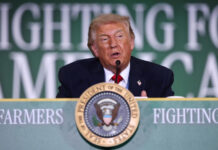
“They don’t work,” he said in his address to the U.N. General Assembly. “They’re too expensive and not strong enough to fire up the plants that you need to make your country great.” He labeled the energy transition and immigration “this double-tailed monster [that] destroys everything in its wake.”
“It feels like the president has a personal dislike of renewables — particularly wind turbines — that is coloring the posture of this country’s overall energy policy,” said Mark Finley, a fellow in energy and global oil at Rice University’s Baker Institute for Public Policy. “At a time prices for power are rising significantly and electricity demand is growing rapidly, to not have an all-of-the-above approach and let the market sort it out is a striking situation to be in. Because we are going to need all of it.”
During last month’s state visit to Britain, Trump said he hoped Prime Minister Keir Starmer would follow the U.S. example and give up wind power in favor of drilling. Trump made the reduction of tariffs on the European Union contingent on the bloc agreeing to purchase U.S. liquefied natural gas, oil and nuclear energy. And after the U.S. imposed 25 percent tariffs on India, Energy Secretary Chris Wright talked about looking forward to boosting fossil fuel energy cooperation with India.
Experts and analysts say America risks a loss of geopolitical clout and economic opportunity by opposing technologies that it once helped innovate.
China, with a lockdown on solar panel and electric vehicle production, has already positioned itself as a kingmaker for any country seeking clean energy. Experts point to the surge in solar imports across the developing world as one sign that countries will favor China’s pitch over America’s.
The U.S. is heading toward a $152 billion trade deficit in clean energy manufacturing by 2035, according to IEA data. China, meanwhile, is on track to earn more from exporting clean energy technologies by that time than all of the oil revenue generated by the gulf states combined last year.
There are still reasons the U.S., in the short term, will find takers for its fossil fuels. The world’s electricity needs are growing quickly — because of data centers, energy-thirsty artificial intelligence, rising temperatures and air conditioning. For countries that already have multibillion-dollar networks of pipelines and liquefied natural gas terminals, gas imports remain an attractive option.
Europe still needs gas during its transition. It would prefer to buy from the U.S. over Russia.
The economies of China, Vietnam and the Philippines are growing so fast that they also need gas to supplement all the renewable generation they are building. The gas can be a convenient replacement for the heavily polluting coal plants powering factories, as that part of the world grapples with dirty air.
But global electricity forecasts anticipate that renewables will come online faster than demand rises, shrinking the global role for fossil fuels in the coming years.
“The same calculation will be made in every country in the world,” said Kingsmill Bond, an energy strategist at the pro-renewables think tank Ember. “You might pay lip service to Trump, but meantime you’ll be working night and day to get cheaper energy. This is a battle [clean technology] is going to win.”
Fortescue canceled two major investments in the United States this year, amid an exodus driven by Trump’s antipathy for clean energy technologies. It scrapped plans to build a $550 million green hydrogen plant in Buckeye, Arizona, and a $210 million plant in Detroit that was to innovate and manufacture advanced battery technologies.
“We are going where we feel welcome,” he said, during an interview aboard a vessel he retrofitted to run on emissions-free ammonia.
In Australia, Fortescue’s mining consumes as much energy as a medium-size U.S. city. It has its own power grid, which Forrest is converting to run exclusively on clean power. He said it will ultimately save the company billions of dollars, while providing energy around-the-clock. Forrest stressed that Fortescue’s operations need power 24/7.
“You can keep your disbelief in global warming all you like,” he said, “but don’t deny your people the advantages of the lowest-cost energy on earth.”
Courtesy/Source: Washington Post