























































































FEBRUARY 23, 2026
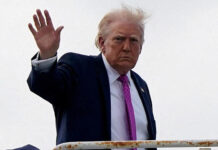
BANGKOK — U.S. futures declined and global markets exhibited mixed reactions on Monday following the Supreme Court’s decision to overturn most of President Donald Trump’s extensive tariffs.
Despite this ruling, Trump indicated his intention to explore alternative methods for imposing import taxes, including an executive order for a global tariff initially set at 10% and later increased to 15%. He mentioned the possibility of implementing additional tariffs that would necessitate investigations by the Commerce Department.
Market Reactions to Tariff Policy Changes
Officials from the Trump administration expressed confidence that other nations would adhere to trade agreements linked to the overturned tariffs. However, market responses have been cautious, reflecting uncertainty regarding future policy actions.
Benjamin Picton of Rabobank commented on the situation, stating, “The mixed reactions highlight the winners-and-losers effect of shifts in tariff policy, which has just delivered a boost to countries that previously had a comparatively bad deal.” He further noted, “U.S. tariff policy will continue to be a source of uncertainty for markets as traders attempt to price in the implications of what is still a movable feast.”
Cryptocurrency Market Dynamics
In the cryptocurrency market, Bitcoin experienced a drop of up to 5% early Monday, falling below $65,000 before recovering some losses later in the day. This decline stemmed from investors withdrawing from speculative assets amid concerns regarding future regulations in the cryptocurrency sector.
Since reaching an all-time high of $126,210.50 on October 6, Bitcoin has lost nearly half of its value, raising alarms among traders and analysts.
Global Market Performance Overview
Germany’s DAX index fell by 0.5% to 25,137.69, while the CAC 40 in Paris remained stable at 8,515.65. The FTSE 100 in Britain also showed minimal change at 10,685.10. In the U.S., futures for the S&P 500 decreased by 0.2%, the Dow Jones Industrial Average dropped by 0.3%, and the Nasdaq composite index fell by 0.3%.
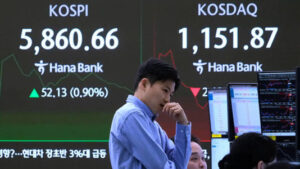
Markets in Japan and mainland China were closed due to holidays, but Hong Kong’s Hang Seng index led regional gains, surging 2.5% to 27,081.91. South Korea’s Kospi increased by 0.7% to 5,846.09, while Australia’s S&P/ASX 200 declined by 0.6% to 9,026.00. Taiwan’s Taiex rose by 0.5%, and India’s Sensex increased by 0.6%, while Bangkok’s SET ended nearly flat.
Impact of Economic Reports on Market Sentiment
On Friday, Wall Street maintained stability following the Supreme Court’s tariff ruling, which had previously caused market turmoil when announced last year. The S&P 500 rose by 0.7%, the Dow added 0.5%, and the Nasdaq composite gained 0.9%.
Despite discouraging reports indicating slowing U.S. economic growth and rising inflation, the market’s response was relatively muted. These reports underscore the Federal Reserve’s ongoing challenge regarding interest rates, yet traders remain optimistic that the Fed will lower rates at least twice this year, according to data from CME Group.
Lower interest rates could stimulate the economy and boost investment prices, although they also carry the risk of exacerbating inflation. Fed officials have indicated that they prefer to see inflation decrease further before considering additional rate cuts.
Commodity Market Updates
In commodity trading, U.S. benchmark crude oil prices fell by 33 cents to $66.15 per barrel, while Brent crude, the international standard, decreased by 34 cents to $70.96 per barrel. The U.S. dollar slipped against the Japanese yen, moving to 154.85 from 154.94, while the euro rose slightly to $1.1799 from $1.1797.
The price of gold increased by 1.8%, and silver prices surged by 5.2%, indicating a flight to safety among investors amid market uncertainties.
Courtesy/Source: Times Now / PTI