

















































APRIL 5, 2021
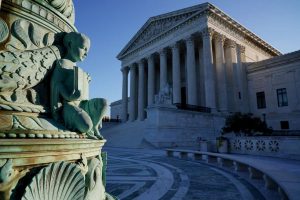
In 1977, the Supreme Court established a broad definition for “undue hardship” faced by employers. – J. Scott Applewhite, AP
WASHINGTON, D.C. – The Supreme Court declined Monday to hear an appeal that could have set a different standard for when employers must accommodate the religious beliefs of workers, but two of the court’s conservative justices questioned the decision in a sharply worded dissent.
The justices have tended to look favorably on religious claims, from churches and synagogues successfully challenging coronavirus restrictions to religious entities that beat back requirements that they provide health insurance coverage for contraceptives.
Jason Small was an electrician for Memphis Light, Gas and Water for more than a decade. His troubles began after an injury in 2013 required him to transfer jobs. Memphis Light offered him a position as a service dispatcher, but Small, a Jehovah’s Witness, worried the job would conflict with his desire to attend services on Wednesday evenings and Sundays and take part in community work on Saturdays.
Small sued in 2017, alleging religious discrimination. A federal district court and the Ohio-based U.S. Court of Appeals for the 6th Circuit found that he lacked enough evidence for most of his claims. But in a concurrence, appeals court Judge Amul Thapar wrote that the standard used to decide such cases since a Supreme Court decision in 1977 should be reconsidered.
If and when the Supreme Court decides to consider that issue, its ruling could affect corporate dress codes, such as for head scarves, turbans and beards, as well as schedules that permit employees to worship.
The court offered no explanation for its decision not to hear the dispute. Associate Justices Neil Gorsuch and Samuel Alito said it is time to take another look at the standard used to decide such cases.
Federal law requires companies to make accommodations for their workers’ religious beliefs as long as it doesn’t present an “undue hardship.” In 1977, the Supreme Court defined “undue hardship” as anything having more than a “de minimis,” or trivial cost. That means employers can avoid making accommodations in many situations.
Gorsuch, in a dissent joined by Alito, asserted that those circumstances allow “subpar employees” to receive more favorable treatment than highly performing workers if the latter group seeks only to attend church.
“There is no barrier to our review and no one else to blame,” Gorsuch wrote. “The only mistake here is of the court’s own making – and it is past time for the court to correct it.”
Even before Associate Justice Amy Coney Barrett took her seat on the court in October, adding another conservative voice to the nation’s highest bench, the justices have looked kindly on religious claims. The court allowed taxpayer money to be directed to religious entities in some situations, exempted employers with religious objections from providing insurance coverage for contraceptives and allowed a massive Latin cross to stay on government land within a few minutes’ drive from the nation’s capital.
Alito called on the high court to revisit workplace accommodations for religion last year in an opinion joined by Associate Justice Clarence Thomas and Gorsuch.
Courtesy/Source: This article originally appeared on USA TODAY