
















































































MAY 11, 2026
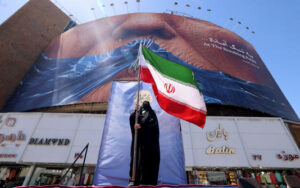
Iran’s counter-proposal, issued through Pakistani mediators, swept aside most of Washington’s key demands – Atta Kenare/AFP
Iran has rejected significant parts of Donald Trump’s peace plan, ruling out an immediate deal to dismantle its nuclear programme or hand over its enriched uranium.
The fate of Tehran’s 450kg of near weapons-grade material has been a key stumbling block in negotiations. America and Israel have consistently maintained that Iran must hand over the enriched uranium as part of a comprehensive deal to end the war.
Instead, Iran issued a counter-proposal through Pakistani mediators which swept aside most of Washington’s key demands.
Tehran proposed an end to the fighting “on all fronts, especially Lebanon” and a gradual reopening of the Strait of Hormuz along with the US lifting its naval blockade – before nuclear issues begin to be negotiated.
The US president branded Tehran’s response as “totally unacceptable”.
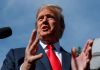
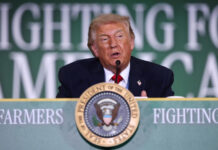
“I have just read the response from Iran’s so-called ‘Representatives.’ I don’t like it — TOTALLY UNACCEPTABLE! Thank you for your attention to this matter,” he wrote on Truth Social on Sunday night.
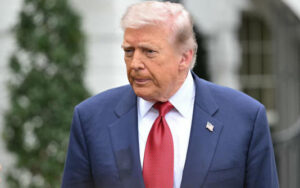
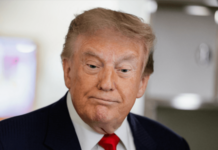
Donald Trump rejected Iran’s response to his peace offer on Sunday – AFP
The significant gaps between both sides make it unclear whether a comprehensive peace agreement could follow, raising fears of a protracted conflict in the Middle East.
Washington’s 14-point proposal – intended as a shorter-term agreement before the finer details are worked out over 30 days – is understood to have focused on extending the truce in the Gulf, both sides reopening the Strait of Hormuz, and advance commitments to Iran’s curbing its nuclear program and handing over its uranium stockpile.
Sources told The Wall Street Journal that Iran had refused to dismantle its nuclear facilities, but was willing to suspend uranium enrichment for a shorter period than the 20 years proposed by the US.
Tehran is also offering to dilute some of its stockpile and transfer the rest to a third country if it receives guarantees that the uranium will return if negotiations fail or Washington abandons the agreement.
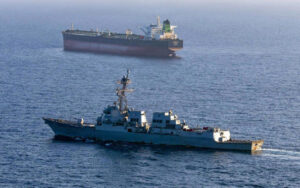
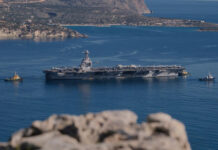
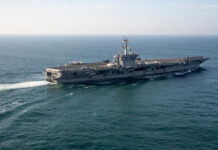
USS Rafael Peralta has been among American ships enforcing the blockade against Iranian traffic in the Strait of Hormuz – AFP
In response to Mr. Trump’s anger at their counter-offer, Iranian state media quoted an official saying: “No one in Iran drafts plans to please Trump… if Trump is not satisfied with it, that is naturally better.”
Earlier on Sunday, Mr Netanyahu demanded that Iran’s highly enriched uranium be “taken out” before any peace deal is signed.
“It’s not over, because there’s still nuclear material – enriched uranium – that has to be taken out of Iran,” the Israeli prime minister said in an interview with 60 Minutes on CBS, adding: “There’s still enrichment sites that have to be dismantled.”
Netanyahu also noted that other other key issues have not been addressed by the conflict, including Iran’s regional proxies and its ballistic missile production.
After Tehran sent its counterproposal, he left a meeting early in order to return to Jerusalem to hold what was described in Israeli media as an “urgent” phone call with Trump.
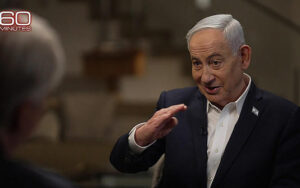
Benjamin Netanyahu said Iran’s nuclear stockpile was there for the taking – CBS
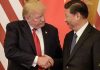
With peace talks continuing to flounder, Trump will travel to Beijing on Wednesday for a crucial summit with Xi Jinping.
A senior administration official said the US president is intending to pressure his Chinese counterpart into pushing Iran into shifting from its maximalist positions, a senior administration official said.
Trump had hoped to arrive in China with the leverage of a victory against one of Beijing’s allies, but instead the visit is likely to be clouded by a ceasefire that is struggling to hold, shipping severely restricted in the Strait of Hormuz and his approval ratings at record lows.
The first president to visit China in nearly a decade, Mr Trump will be focused on trade issues alongside Iran, while Xi will also be seeking progress on the issue of Taiwan.
In a pre-recorded interview aired Sunday, Mr Trump told journalist Sharyl Attkisson that Iran was “militarily defeated” and he insisted that the uranium could be removed “whenever we want.”
The president is under increasing domestic pressure to end the Iran war and he claims that Tehran’s nuclear program has been contained.
Mr Trump announced a temporary ceasefire, halting the US and Israeli military campaign against Iran that began on Feb 28. However, more than a month later, no agreement has been reached to end the war.
Iran has remained outwardly defiant, although frantic diplomacy continues behind-the-scenes.
“We will never bow down to the enemy, and if there is talk of dialogue or negotiation, it does not mean surrender or retreat,” Masoud Pezeshkian, the Iranian president, said on Sunday.
Also on Sunday, Iran threatened to strike British and French warships in the Strait of Hormuz if they attempted to help reopen the waterway.
Britain had announced a day earlier that it was deploying HMS Dragon, a Type 45 destroyer, to the Middle East ahead of its “potential role” described as a “strictly defensive and independent” mission.
In response, Kazem Gharibabadi, Iran’s deputy foreign minister, said warships “potentially accompanying the illegal and internationally unlawful actions” of the US “will be met with immediate decisive response”.
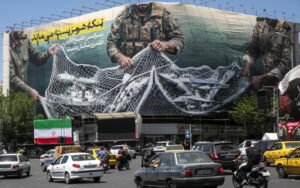
A poster depicts Iranian soldiers holding a net in the shape of the Strait of Hormuz, with US military aircraft ensnared in it – Majid Saeedi/Getty Images
Emmanuel Macron, the French president, later clarified that his country had “never envisaged” a naval deployment in the Strait of Hormuz, but rather a security mission “coordinated with Iran”.
A new wave of drone attacks in the Gulf on Sunday were the latest to test the ceasefire after a string of flare-ups in recent days.
The United Arab Emirates said its “air defence systems successfully engaged two UAVs launched from Iran” in what would be, if confirmed, only the second strike on a Gulf country since the start of the month-old truce.
Iran’s neighbour Kuwait reported an attempted attack, while Qatar’s defence ministry said a freighter arriving in its waters from Abu Dhabi was hit by a drone.
Courtesy/Source: The Telegraph