































































































MARCH 28, 2026
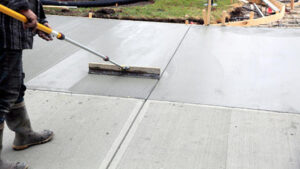
Man smoothing a freshly poured concrete driveway. – Constantgardener/Getty Images
When you’re in the middle of planning a DIY driveway, one of the major questions to consider is what material you want to use. Each material has pros and cons, but finding the one that’s right for you means considering all the options. One option you may not be familiar with is crushed concrete. If you want a driveway that’s easier to install and more affordable than poured concrete, then crushed concrete might be the right fit.
As the name implies, crushed concrete driveways are made from concrete that has been broken up into smaller pieces. It looks similar to gravel, but it doesn’t need to be mined. Instead, concrete left over from other buildings or projects is used. This is what makes it so eco-friendly. If the concrete wasn’t crushed, it would likely be left to sit in a landfill. Reusing it helps keep it out of there, while also reducing the amount of new concrete that needs to be made for fresh projects like your driveway. Additionally, you don’t need to worry about crushed concrete cracking and needing repairs, since it’s already broken into pieces. Instead, gaps can be filled in by simply adding more crushed concrete to the top.
Since it is made from recycled materials and can be installed yourself, crushed concrete driveways typically cost less than most other driveway materials, including poured concrete. Crushed concrete can cost as little as $0.60 per square foot, while poured concrete can cost several times more. Of course, the exact cost will depend on the size of the driveway, how much of the work you’re able to do yourself, and what types of prep work you need to do before installation.
Installing a crushed concrete driveway
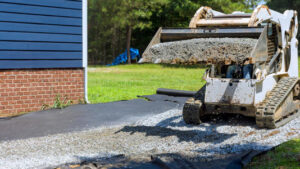
Equipment spreading crushed concrete or gravel over landscape fabric. – Photovs/Getty Images
Start by preparing the area and calculating how much crushed concrete you’ll need. The size of the crushed concrete pieces will influence the amount, with larger pieces taking up more room, but needing a deeper installation depth. Manufacturers typically provide guidelines for how much space one ton of crushed concrete will cover, so try to find a supplier you like first and check their guidance for more specific advice. Then, find the amount of space you need to fill by multiplying together the length, width, and depth of your driveway. Divide that number by the amount of space one ton of the crushed concrete will cover to get the number of tons you’ll need to fill your driveway.
Prepare the area by removing any objects, plants, or debris. If you’re replacing an existing driveway, you’ll need to remove it first. The materials at the base of your driveway should be three to four inches thick and at least nine inches deep, and you may need to rent an excavator to dig the area out. If your driveway sits on a slope, pay attention to how steep the hill is. The recommended driveway slope is around 2%, but it doesn’t need to be exact. Some municipalities may have limits on how steep a driveway can be, but you likely won’t need to worry about that as long as the grade is below 10%. While the grade has some wiggle room, it’s crucial that it slopes away from your home to keep water draining away from your foundations.
Once the area is excavated, the hard part is done. Cover the soil with landscaping fabric to keep weeds at bay, then pour your crushed concrete over it. Spread it as evenly as possible and tamp it down firmly. You can rent a plate compactor for the most even compaction, or simply drive over the driveway a few times.
Is a crushed concrete driveway right for you?
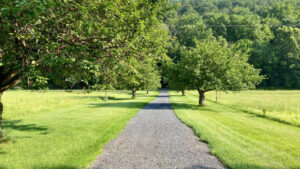
Crushed concrete driveway. – Mdoculus/Getty Images
If your driveway needs to be replaced and you’re looking for a low-maintenance and cost-effective option, then crushed concrete driveways are likely a great fit. However, if you’re on a particularly tight budget then you may want to look at gravel as well. Gravel prices can range quite a bit, depending on the type of stone and how much you need. In some cases, gravel may be more affordable than crushed concrete, but the latter is usually more cost-effective. You’ll need to look at local suppliers and compare prices to be sure.
One potential drawback is the aesthetic of crushed concrete. It’s a plain gray color, and can sometimes become dusty. If you really want to avoid dealing with concrete dust or want your driveway to look a certain way, then it’s best to consider other options. You can use crushed concrete as the base layer underneath gravel to split the difference between the two, or opt for something more aesthetically appealing like bricks. On the other hand, crushed concrete is more sustainable than materials like gravel or asphalt. If that’s a priority for you, then using crushed concrete for your driveway and finding other ways to beautify the area may be the better fit.
A relatively minor drawback to crushed concrete driveways is that the pieces can shift or break down further over time. You can use some of the same ways to keep gravel in place, such as edging or gravel grids, to reduce the amount of concrete pieces that roll out of your driveway. These solutions aren’t absolutely perfect, though, and some concrete pieces may still wear down over time due to water absorption and the friction from car wheels. You’ll likely need to add some more crushed concrete to your driveway eventually.
Courtesy/Source: This article was originally posted on Hunker.com