

















































































MARCH 31, 2026
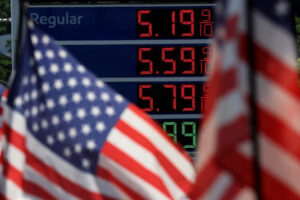
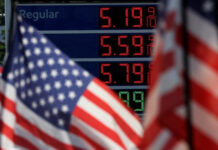
Gasoline prices are displayed at an Exxon gas station behind American flag in Edgewater, New Jersey, U.S., June 14, 2022. REUTERS/Mike Segar
The national average retail price of a gallon of gasoline topped $4 for the first time in more than three years, as the war in Iran continues to drive up oil costs and raise prices at the pump. Consumer sentiment seesawed, but financial markets took the news in stride.
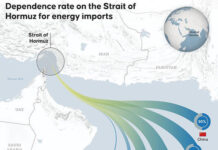
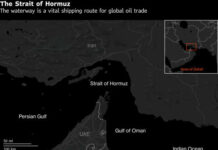
The halting of most traffic in the Strait of Hormuz, which typically carries about 20% of the global oil supply, and increased insurance costs have led the average price of unleaded gas to climb more than a dollar in the month since the war began. The increase comes as President Donald Trump threatens to execute a large-scale bombing campaign against Iranian civilian infrastructure and as peace talks between the two countries’ leaders appear to have stalled.
As of the morning of March 31, regular unleaded is averaging $4.02, up from $2.98 in February, according to AAA. Brent crude, the global oil benchmark, topped more than $100 a barrel on Monday for the first time since 2022 when Russia invaded Ukraine. On March 31, it stood at $117 a barrel.
Consumer impact
“The conflict in the Middle East and the ensuing rise in oil prices represents the latest in a long line of challenges for the U.S. consumer,” said Ben Shumway, a Goldman Sachs analyst, in a March 31 report.
While energy costs have been this high in recent memory, the costs of everything else across the economy, from food to healthcare, have increased dramatically. Most analysts believe there’s no relief in sight as long as the war continues. On March 30, for example, JetBlue raised its checked bag fees, citing higher operating expenses.
A closely-watched reading of consumer confidence from the Conference Board was higher than expected on March 31. Still, some of the details reflected concerns. “Consumers’ write-in responses on factors affecting the economy continued to skew towards pessimism,” the group’s chief economist said in a statement.
“Comments about prices and the cost of goods suggest that the cost of living remained at the top of consumers’ minds. As the war in Iran overlapped significantly with the survey sample period, comments about oil/gas and war/conflict spiked.”
This reading contrasts with the University of Michigan’s final tally for March, which slid more sharply than analysts had anticipated.
Wall Street disconnects from Main Street
Stocks surged March 31 even as gas prices spiked, a reminder that Main Street and Wall Street don’t always move in tandem.
Financial markets have focused on the ultimate path of inflation throughout the five-week war, and a decline in bond yields Tuesday may have helped stocks find their footing. Bond yields fall as prices rise, and vice versa. Investors have been selling fixed-income assets because they become less valuable when overall costs are rising.
It’s important to note March 31 is both the end of the month and the end of the quarter, when massive institutional investors like mutual funds need to rebalance their portfolios. Those flows may have influenced the market’s patterns Tuesday.
Other crosscurrents may be influencing financial flows as well. Some analysts attribute the recent massive sell-off in gold, normally a safe haven for investors, to central banks needing to raise cash to fund their war efforts.
How will the Fed react?
Speaking to a class of Harvard University students on March 30, Federal Reserve Chair Jerome Powell said the war is raising prices at the pump for American consumers, but said inflation expectations remain stable over the longer term and that he thinks U.S. monetary policy is in “a good place for us to wait and see.”
“Monetary policy works with long and variable lags, famously,” Powell said. “And so, by the time the effects of a tightening in monetary policy takes effect, the oil price shock is probably long gone.”
As retail costs rise unevenly across the country, some California drivers saw gas prices as high as $9 a gallon. As of March 31, regular unleaded is averaging $5.89 in the state, according to AAA.
With affordability top of mind, some Americans are getting creative – bearing long pump lines at Costco or Sam’s Club for discount gas, downloading the GasBuddy mobile app to find for the cheapest prices, and taking advantage of fuel rewards programs.
Courtesy/Source: This article originally appeared on USA TODAY