









































































MARCH 21, 2026
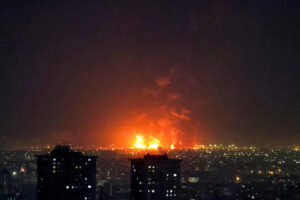
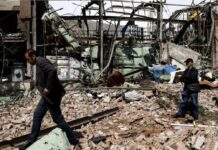
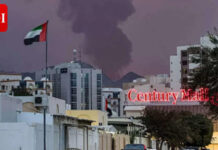
Explosions erupt following strikes at Tehran Oil Refinery in Tehran on March 7. – Atta Kenare
In a twist of wartime irony, the United States has moved to ease sanctions on Iranian oil to cool surging energy prices, a potential boon for Tehran as Washington scrambles to contain the economic shockwaves of its military campaign.
Treasury Secretary Scott Bessent said Friday the easing of sanctions, first imposed after Iran’s 1979 revolution, would be “narrowly tailored” and only temporary, “permitting the sale of Iranian oil currently stranded at sea.”
“By temporarily unlocking this existing supply for the world, the United States will quickly bring approximately 140 million barrels of oil to global markets, expanding the amount of worldwide energy and helping to relieve the temporary pressures on supply caused by Iran,” Bessent added.
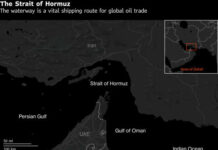
About 20% of the oil that the world consumes every day travels via the Strait of Hormuz, which runs along part of Iran’s coast. But since the war began at the end of February, shipping in the channel has come to a halt.
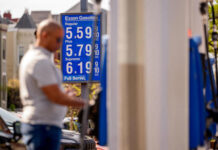
Retail gas prices have risen 93 cents per gallon and U.S. crude oil has soared more than 70% since the start of the year, as geopolitical strategy and economic reality collide.
At current prices, the amount of oil Bessent said the measures would bring to the market would be worth more than $14 billion for Tehran.
Experts say his decision shines a light on a lack of strategic planning, and warn that such measures are unlikely to make a difference to the wider economic pressures.
“The U.S. is funding a war against itself,” Danny Citrinowicz, a senior researcher on Iran at the Institute for National Security Studies, which is affiliated with Tel Aviv University in Israel, told NBC News.
“What we are seeing is really a flawed campaign, not in terms of operational size, but from the strategic preparation for the campaign itself,” he said. “The oil price is becoming much more important than eliminating this regime in Iran.”
Moritz Brake, a senior fellow at the Center for Advanced Security, Strategic and Integration Studies, said that the decision to ease sanctions on Iranian oil “points in the direction of an underestimation of how well Iran would be able to resist the assault and the repercussions on the global economy.”
“The risks have been underestimated,” he told NBC News.
The U.S. has already undertaken other efforts to boost supply, including the release of millions of barrels of oil reserves, part of a global effort from International Energy Agency member countries. Since the beginning of the month, the administration has also lifted the Jones Act, easing some shipping regulations, and has temporarily lifted sanctions on Russian oil as well.
Brake noted that the war in Iran was having a “double effect” on Russia’s war on Ukraine.
“On the one hand, drone attacks have gone down in Ukraine because of Iranian drones no longer being shipped to Russia.” he said. “At the same time, the Russian war machine gets fueled with additional money because of rising oil prices and lifted sanctions.”
Stocks sold off sharply Friday as headlines about the war weighed heavily on market sentiment, delivering the worst four-week trading period since April 2025, when the Trump administration’s trade tariffs dominated the news.
Oil prices rose once again, with international (Brent) oil trading around $111, ending Friday up 8.3% in a week and 84% for the year.
United Airlines CEO Scott Kirby said in an email to employees Friday that the company will be canceling some flights as it prepares for higher oil prices because of the war with Iran.
“Our plans assume oil goes to $175/barrel and doesn’t get back down to $100/barrel until the end of 2027,” Kirby wrote. “Honestly, I think there’s a good chance it won’t be that bad,” he added, but “there isn’t much downside for us to preparing for that outcome.”
Kirby wrote that some less profitable flights are expected to be cut in the short term because of oil prices, like off-peak and red-eye flights. He made the comments in a message in which he said that jet fuel prices have more than doubled in the last three weeks.
“If prices stayed at this level, it would mean an extra $11B in annual expense just for jet fuel,” he said. “For perspective, in United’s best year ever, we made less than $5B.”
Citrinowicz said that measures to ease sanctions were unlikely to change the economic reality.
“Everybody knows that as long as Iran is controlling the straits, nothing will change in terms of the ability to take out the oil,” he said. “You cannot beat geography.”
Courtesy/Source: This article was originally published on NBC News