
























































































AUGUST 20, 2026
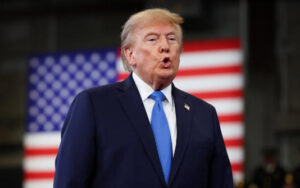
Donald Trump’s administration launched an intervention to calm investors after a global government bond sell-off – Samuel Corum/Getty Images
The Trump administration has said it is prepared to step up its intervention in the bond market after concerns about soaring US debt triggered another global sell-off.
Scott Bessent, the US treasury secretary, said the move to double the amount of money available to purchase long-term debt to $4bn (£2.9bn) per issue could be further increased.
“It could be more than the $4bn per issue,” Mr Bessent told CNBC on Thursday. “We have a big toolkit, so we’ll see.”
Mr Bessent’s comments came after investors dumped US bonds in a fresh wave of selling, with traders warning that Donald Trump risked losing credibility with the market after America’s debt pile rose above $40tn overnight.
Yields on 30-year US treasuries rose as high as 5.27pc on Thursday, reversing an earlier drop in borrowing costs after the White House said it would pump billions of dollars into the bond market a day earlier.
The rapid pace of the reversal caught many traders by surprise. Mohamed El-Erian, the chief economic adviser at Allianz, said the “speed and magnitude of the retracement” had left many off-guard.
Rising oil prices and renewed inflation fears also pushed yields on benchmark 10-year treasuries higher as well as borrowing costs around the world.
This includes in the UK, where yields on 30-year debt climbed to 5.82pc, approaching levels not seen since 1998.
Mr Bessent’s remarks only slightly tempered these increases.
However, he insisted the Mr Trump remained serious about balancing the books, adding that the president was “laser-focused” on bringing debt down.
He said that the treasury and Office of Management and Budget (OMB) had identified savings worth “several hundred billions of dollars” where money was currently “being frittered away”.
“Yields don’t reflect the underlying fundamentals,” he added.
However, analysts at JP Morgan said borrowing costs would keep rising unless the Mr Trump took concrete steps to reduce the US’s borrowings.
Jay Barry, a managing director at JP Morgan, said: “Absent real fiscal consolidation, we fear the markets will view this action as lacking credibility.”
He added that this could also shake investor confidence in what is still deemed the world’s safest asset.
“This could contribute to higher term premiums and yields over time should treasury become more opportunistic in its approach to debt management and move further away from its ‘regular and predictable’ tenet.”
At a press conference on Wednesday night, Mr Trump insisted the public should not worry about increasingly volatile bond markets.
Asked whether Americans should be worried, Mr Trump said: “No, I don’t think so. Our country is doing so well despite interest rates.”
He reiterated his belief that US interest rates had remained “artificially high” after policymakers at the Federal Reserve voted to hold rates last month.
However, analysts warned that a weaker dollar was all but inevitable if the administration were unwilling to bring down the US’s $40tn debt, which could fuel a fresh wave of inflation before the midterm elections.
Kit Juckes at Société Générale noted that the US debt pile was already much larger than annual output.
“This will be a growing issue, which will either force the US to tighten fiscal policy, accept higher borrowing costs, or let the dollar weaken,” he said.
Analysts at Jefferies said families would be hit by higher long-term borrowing costs in a move that could cost the Republican Party votes.
Mohit Kumar, of Jefferies, said mortgage rates were tied to yields on long-dated US debt, warning that the “Trump administration cannot afford much higher yields going into the long end”.
It comes as figures suggest the US’s debt interest bill is on course to hit $1tn this month amid surging borrowing costs for the world’s largest economy.
US debt interest stood at $931bn at the end of July, according to US treasury data, with $104bn added to the bill in July alone.
The surge in US debt has been driven in part by billions of dollars in lost income after the US supreme court ruled that a large share of his tariffs were illegal.
As well as bond market pressures, Trump is also battling inflation fears caused by his war in Iran.
Oil prices rose 2pc to almost $94 a barrel on Thursday after the president pledged to launch the “most crushing economic operation ever taken against any country”.
However, Bessent insisted that the administration would focus on exerting “maximum economic pressure” to avoid warfare.
He said: “I think oil markets are misinterpreting what this economic pressure means.
“The economic pressure means that we are going to all of our allies, and this is going to be the greatest coordinated economic isolation in the history of the world.”
The US government is now as risky an investment as AI
Courtesy: The Telegraph