





























































































JUNE 10, 2026
US Inflation Heated Up to 4.2% in May.
Year-over-year inflation hit a three-year high of 4.2% in May, as the Iran war pushed energy prices higher. Beyond the gas pump, though, there were fewer signs of quickly rising prices.
The numbers
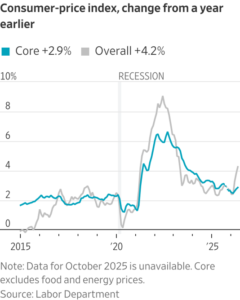
Consumer prices were up 4.2% in May from a year earlier, the Labor Department said Wednesday, accelerating from 3.8% the previous month.
That was the highest year-over-year print since April 2023 and a sign that high energy costs stemming from the conflict with Iran are continuing to push up price pressures.
Yet the month-over-month rate of increase cooled slightly compared with April, a sign that the sharp rise in energy prices may have peaked and be softening.
Economists said May’s reading, which was in line with expectations, is likely to be the high water mark in the recent run-up in inflation from this year’s energy-price shock. That’s assuming gasoline prices, which have ticked down in June, don’t accelerate again on renewed conflict in the Strait of Hormuz.
Prices excluding food and energy categories—the so-called core measure economists watch in an effort to better capture inflation’s underlying trend—rose 2.9% on the year. That was in line with forecasts, and was slightly hotter than 2.8% the previous month.
Over the month
The energy index accounted for over 60% of the increase in the consumer-price index from the previous month, the Labor Department said.
The month-over-month change in the CPI was slightly cooler in May than in April. Prices rose 0.5% in May from the month before, slowing slightly from 0.6% in April and 0.9% in March. The May change matched analysts’ expectations.
Meantime core prices rose 0.2%, cooler than 0.4% in April and less than the 0.3% that economists had expected. Economists see core prices as a better predictor of future inflation.
“I think that we’re approaching the peak” in year-over-year inflation, said Joe Brusuelas, chief economist at RSM. Even so, there’s still a lag impact of high energy prices on other categories, he warned, and the boom in artificial intelligence investment is causing supply-chain bottlenecks that will also put upward pressure on prices.

Consumer confidence has been dented by higher energy costs. – George Walker IV/Ap
How markets are reacting
U.S. stocks opened in the red. The Nasdaq Composite fell nearly 1%. The S&P 500 and the Dow Jones Industrial Average were also down.
Gasoline
The war in Iran pushed average gasoline prices to a four-year high of $4.56 a gallon in late May, according to AAA, although they have cooled to about $4.15 since then.
The May CPI report showed energy prices increased 3.9% on the month in May, an acceleration from 3.8% in April. The index for gasoline jumped 7% on the month and was up more than 40% on the year.
Industries
Wednesday’s report contained a few signs that high gasoline prices are filtering into other costs. Airline tickets were up 2.7% from April.
But prices for food, housing and clothing rose more slowly, a welcome reprieve for inflation-weary households. Some other categories posted outright declines from the previous month. Car insurance decreased 1.7% in May from April, prescription drugs dropped 0.9% and prices for new vehicles declined 0.3%.
The impact on workers
A separate report from the Labor Department on Wednesday showed that inflation outpaced year-over-year wage gains in May for the second month in a row. Inflation-adjusted hourly earnings declined 0.7% on the year in May after dropping 0.3% in April.
That means households’ purchasing power isn’t keeping up with increases in the cost of things like rent, groceries and gasoline. Prices rising faster than incomes could be a check on future economic growth, economists warn.
The context
Americans have been feeling pain at the pump since the initial U.S.-Israeli attack on Iran in late February. Higher energy costs have dented measures of consumer sentiment.
There are few signs of a lasting resolution to allow oil tankers to move through the Strait of Hormuz, meaning supply constraints on global energy markets are expected to continue.
Higher fuel prices are creating difficulties for small businesses, according to a recent survey by the National Federation of Independent Business. A third of owners said in May they plan to increase prices, the highest reading since July 2022.
What this means for the Fed
Inflation is looming large for Federal Reserve policymakers as they gear up for their first gathering under new Chairman Kevin Warsh in a week’s time. The central bank is facing overlapping inflationary shocks from tariffs, energy costs and the investment boom in artificial intelligence.
The pickup in inflation in recent months, combined with signs that the labor market is on a more solid footing, provide grist to Fed officials who fear interest rates are too low to restrain new price pressures.
Investors entered the year expecting rate cuts. But traders are now increasing their bets that the Fed will have to raise interest rates by the end of the year.
Courtesy/Source: This story was originally published by WSJ