

















































































NOVEMBER 22, 2026
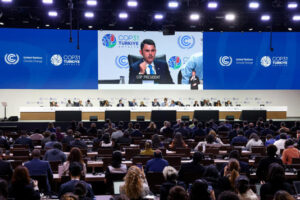
COP31 negotiations break down.
The United Nations climate summit in Turkey broke down Sunday, after countries failed to reach consensus for a proposed agreement on tackling global warming.
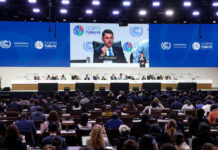
“I am deeply disappointed that COP31 has ended without consensus on an overarching outcome,” U.N. Secretary-General António Guterres said at the 31st UN Climate Change Conference, known as COP31. “I share the very profound frustration of all those who expected governments to rise to the moment the climate crisis demands.”
The draft text of the agreement excluded any explicit reference to fossil fuels despite attempts to find a compromise after the issue threatened to derail the talks. Instead, it referred indirectly to an agreement reached at COP28 in Dubai, which committed countries to a transition away from fossil fuels, without repeating that pledge.
Negotiations among the nearly 200 participant countries were in their second day of overtime — making the climate summit the longest in history. It surpassed COP25, held in Madrid in 2019, which ran more than 40 hours beyond its scheduled conclusion.
The European Union formally objected to the COP31 draft, arguing that it “falls well short” of what is needed to address climate change.
Irish Climate Minister Darragh O’Brien, speaking on behalf of the bloc, said the E.U. was “profoundly disappointed” with the draft text, circulated early Sunday, and would not endorse an agreement that “does not even mention fossil fuels.”
“We will not accept negotiating backward in time, and we will not accept a COP that greenwashes fossil fuel,” O’Brien told the conference.
Several other countries also rejected the text, including Panama and the Marshall Islands, a central Pacific nation at high risk from the effects of climate change.
“We came here expecting the world to deliver a comprehensive and urgent response on reducing emissions, on protecting our people and on providing the finance to do this. We have been let down on all sides,” the delegate for the Marshall Islands said, adding: “We will not compromise our future to benefit fossil fuel interests. We will not accept an outcome that undermines our security and threatens our future.”
The conference caps off a year that could be the warmest on record, nearing the previous hottest in 2024, with heat waves across the northern hemisphere killing thousands and fueling wildfires.
The summit’s negotiators had to contend with the certainty that the world will miss a central goal from the 2015 Paris Agreement on climate change: Holding global temperature rise to 1.5 degrees Celsius above pre-industrial times.
Missing that goal means more intense heat and storms, placing renewed emphasis on adapting to the extremes that can no longer be avoided.
But little progress was made in negotiations to increase funding for climate adaptation, as debate broke down over familiar lines. Developing countries demanded more funding from rich nations to confront climate change, in exchange for agreeing to more ambitious goals.
Environmental groups tracking the two-week conference wrote to the COP31 presidents lamenting that the meeting was on track to be “one of the most disappointing COPs” ever because it lacked determination to address the worsening climate crisis.
“The Global South is being abandoned,” said the letter, co-signed by 100 environmental organizations. “Developed countries have blocked progress across the negotiations and arrived with no new finance commitments.”
The draft “is a gift to the fossil fuel industry,” the letter went on. “The major cause of the climate crisis — coal, oil and gas — fails to rate a mention.”
Li Shuo, a Washington-based climate analyst at the Asia Society Policy Institute, said, “The big picture storyline here is the tremendous amount of challenges that the international climate agenda is facing.” He pointed to geopolitical and economic challenges such as President Donald Trump’s tariffs and the Ukraine war’s impact on Europe — as well as the United States’ lack of participation in the talks after Trump withdrew from the U.N. climate treaty this year.
With the United States, the world’s richest nation, and its financial muscle absent from the talks, countries could not reach a deal to increase funding commitments. With the European Union also tightening its belt and weaking its climate policies, developing nations failed to secure an agreement to triple adaptation financing to $120 billion by 2035. China, which sees itself as a developing nation despite being the world’s second-largest economy, has not filled the financial void left by the U.S.
Saudi Arabia and other major oil and gas producers pushed back hardest against having any fossil fuel language, and a slimmed-down draft published Thursday was stripped of all references to ending their use following its objections.
Petro-states argued that individual countries should decide for themselves how to meet their energy needs, and they pushed heavily for carbon-capture technologies instead of a collective commitment to phase out.
Courtesy: The Washington Post