























































JUNE 16, 2026
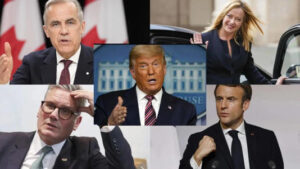
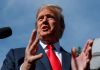
Donald trump and Leaders of G7.
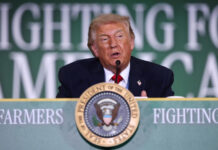
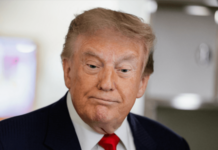
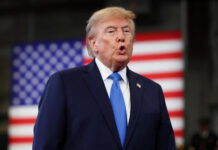
US President Donald Trump has arrived in the French spa town of Évian-les-Bains for the G7 summit, which France is hosting from June 15 to 17. But the calm of the lakeside Alpine resort belies the friction the American president carries into the room.
Trump, on his part, has spent the past several months insulting most of his G7 counterparts, reopening old grievances and igniting fresh feuds with leaders he once professed to admire.
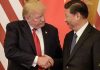
The latest flashpoint came shortly after his arrival, when a handshake with French President Emmanuel Macron drew attention online, with users reading tension into the brief exchange – the latest chapter in a personal rivalry that dates back to their first white-knuckle grip in 2017.
The Iran Rift Runs Through Everything
The deepest source of friction is the war in Iran. Many G7 members have been reluctant to back the US-Israeli military campaign against Tehran, opening sharp divisions within the bloc. Even after Trump announced an agreement with Iran over the weekend, the issue is expected to dominate the summit.
Trump’s Running Feud With Macron
Trump has known Macron, this year’s host, the longest of any G7 leader, and their relationship has swung between shows of respect and personal jabs. Asked in mid-March about French cooperation on a coalition to reopen the Strait of Hormuz, Trump rated Macron’s help “an 8” on a scale of zero to 10 at a White House briefing: “Not perfect, but it’s France.”
Weeks later, the tone curdled. During a private White House lunch on April 1 – captured on a White House video that was briefly posted online before being taken down – Trump mocked Macron’s marriage as he complained that France had declined to send immediate help to the Gulf. “I called up France, Macron, whose wife treats him extremely badly, [he is] still recovering from the right to the jaw,” he said. The remark referenced a viral May 2025 clip in which Brigitte Macron appeared to push her husband’s face as the couple disembarked their plane in Vietnam – footage Macron has dismissed as part of a disinformation campaign.
Macron, who had earlier stressed that France was neither consulted on nor a party to the US-Israeli offensive against Iran, responded to the personal jab during a visit to South Korea, saying Trump’s comments “weren’t elegant, and they weren’t up to par.”
Canada: ‘Remember that, Mark’
Trump has kept up his attacks on Canada, returning to trade grievances and his suggestion that Canada become America’s “51st state,” while pointedly referring to Prime Minister Mark Carney as “Governor Carney.” Tensions sharpened after Carney used a January 20 address at the World Economic Forum in Davos to condemn economic coercion by great powers against smaller nations, remarks widely read as aimed at Washington, though he did not name Trump.
Trump hit back: “Canada lives because of the United States. Remember that, Mark, the next time you make your statements.” Carney, who has largely declined to trade barbs, later answered directly: “Canada doesn’t live because of the United States. Canada thrives because we are Canadian.” He has otherwise brushed off Trump’s online jabs, describing him as an exceptionally active social-media user.
UK’s Keir Starmer Draws Trump’s ire
British Prime Minister Keir Starmer has faced repeated criticism over the UK’s refusal to join military operations against Iran. In early March, after Starmer defended Britain’s decision to stay out of the initial US-Israeli strikes, citing the need for a “viable, thought-through plan” and his rejection of “regime change from the skies” – Trump unloaded in the Oval Office, comparing him unfavourably to Britain’s wartime leader. “This is not Winston Churchill that we’re dealing with,” he said. Trump also faulted London for initially blocking US use of the Diego Garcia base and branded the UK “very, very uncooperative.”
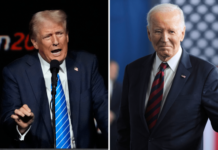
Keir Starmer and former U.S. President Donald Trump, reflecting the familiar mix of diplomacy and political contrast on the global stage.
A brief, formal exchange between UK Prime Minister Keir Starmer and former U.S. President Donald Trump, reflecting the familiar mix of diplomacy and political contrast on the global stage.
Germany’s Merz Falls Out Of Favour
Germany’s Chancellor Friedrich Merz also slipped from Trump’s good graces. According to CNN, Merz made an early positive impression by presenting Trump with the birth certificate of the president’s German-born grandfather, but his standing took a hit after he questioned the Iran war and said the US was being “humiliated by the Iranian leadership.”
Even Giorgia Meloni Was Not Spared
Italian Prime Minister Giorgia Meloni, long seen as Trump’s closest ideological ally in Europe, was not spared after Italy declined to support the war. The rift deepened when Meloni branded Trump’s criticism of Pope Leo XIV “unacceptable”. In an April 14 interview with Corriere della Sera, Trump turned on her: “She is the one who is unacceptable because she doesn’t care if Iran has a nuclear weapon and would blow up Italy in two minutes if it had the chance. I’m shocked by her. I thought she had courage. I was wrong.”
Meloni did not respond directly to the attack but later framed the dispute around sovereignty, telling Italians that being allies “does not mean being vassals.”
Japan’s Awkward Pearl Harbor Moment
Trump has largely spared Japanese Prime Minister Sanae Takaichi, Japan’s first female premier, who has worked to build a warm personal rapport with him. But he has criticized Tokyo’s reluctance to join the Iran campaign, and one remark during her March 19 visit to the Oval Office landed awkwardly. Asked by a Japanese reporter why Washington had not warned allies before striking Iran, Trump invoked the 1941 attack on Pearl Harbor.
“We wanted surprise. Who knows better about surprise than Japan? Why didn’t you tell me about Pearl Harbor?” he said, adding: “You believe in surprise, I think, much more so than us.” Takaichi kept a mostly straight face and did not respond to the analogy, a moment that landed poorly in Japan, where leaders have traditionally avoided invoking Pearl Harbor in modern diplomatic exchanges.
The setting is calm. The relationships, after months of insults, are anything but, and the war that caused most of them will be the first thing on the table.
Courtesy: Times Now / PTI