



























































































JUNE 23, 2026

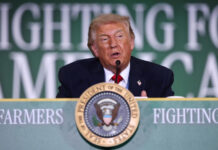
The Trump administration under Homeland Security Secretary Markwayne Mullin is increasingly targeting legal immigration pathways, including cracking down on green card holders and humanitarian protections as well as increasing prosecutions of naturalized citizens (AFP/Getty)
The Supreme Court’s conservative majority gave Donald Trump’s administration a massive boost to support the president’s increasing threats to legal immigration by making it easier for border officers to challenge whether green card holders can return to the country.
Tuesday’s 6-3 decision from Justice Clarence Thomas gives the government greater flexibility to treat returning green card holders as “applicants for admission” — and potentially vulnerable for detention and removal — based on unproven criminal allegations, even if key evidence develops after they’ve returned. Border officers do not need “clear and convincing evidence” that a lawful permanent resident in the U.S. has committed a serious crime before changing their status, according to the nation’s high court.
In a lengthy dissent, liberal Justice Ketanji Brown Jackson said the majority’s ruling “cavalierly swept aside” the rights of green card holders and handed the government a “massive blank check” to rewrite immigration law.
The decision allows the government to upend the status of a green card holder returning to the U.S. “so long as the government is able to show later that he was eventually convicted,” she wrote.
“That sequencing undermines the plain terms and basic operation of the relevant statutory scheme, which guarantees that [lawful permanent residents] will not be ‘regarded as seeking an admission’ at the border unless certain exceptions apply,” she added.
Even if that person is acquitted, and the government’s attempt to remove them is thrown out, those decisions are likely to be “cold comfort” to the green card holder, “who by then might have spent years in legal limbo (with only the protection of a temporary green card) or worse, in detention,” the justice wrote.
Tuesday’s victory for the Trump administration adds to the government’s growing threats against legal immigration pathways, despite the president’s insistence that federal law enforcement is targeting the “worst of the worst.”
Under Trump, U.S. Citizenship and Immigration Services has transformed from an agency largely tasked with administering benefits — including handling applications for citizenship, asylum and other lawful status — into another law enforcement arm in the president’s mass deportation campaign.
Earlier this month, a federal judge determined that a series of USCIS policies illegally discriminated against “countless” asylum seekers, green card applicants and people seeking citizenship “solely by the happenstance of their birth.”
The administration unlawfully used national security concerns that “mask anti-immigrant sentiments” to justify a sweeping set of immigration policies that have left thousands of people in legal limbo, U.S. District Judge John McConnell wrote in that decision.
The Trump administration is also trying to strip Temporary Protected Status for more than 1 million immigrants, and the Supreme Court will soon decide whether the government can remove those humanitarian protections for tens of thousands of Haitian and Syrian immigrants.
Tens of thousands of people who entered the country by using a Biden-era app to schedule their appearance at the U.S.-Mexico border were also told to immediately deport themselves. A judge earlier this year determined the administration unlawfully terminated their status.
Efforts to strip citizenship from naturalized Americans — people who were not born in America but become citizens — have also accelerated this year.
In the case before the Supreme Court, the justices reviewed a challenge from Muk Choi Lau, a Chinese national who became a lawful permanent resident in 2007
Five years later, in May 2012, he was arrested and charged in New Jersey for allegedly selling nearly $300,000 worth of counterfeit goods. He then briefly left the U.S. and returned that June.
Green card holders typically are granted admission after leaving the country for a short period of time, and their admissibility under the Immigration and Nationality Act is only restricted under a narrow set of circumstances, including when they “committed” a crime “involving moral turpitude,” such as fraud.
Immigration officers determined that Lau’s pending charge made him inadmissible on those grounds.
He was allowed to stay in the U.S. only temporarily “to face prosecution for his counterfeiting offense.” He pleaded guilty to trademark counterfeiting in 2013, and immigration judges determined he was subject to removal for his conviction.
But a federal appeals court later determined that immigration officers needed “clear and convincing evidence” that Lau had actually committed a disqualifying crime — not just charges before a conviction — before decision he was inadmissible.
Tuesday’s ruling overturned that decision. Thomas wrote that federal law “does not require a border officer to have clear and convincing evidence that a lawful permanent resident has committed a crime involving moral turpitude before deeming the resident an applicant for admission.”
Courtesy: The Independent