





























































MARCH 1, 2026
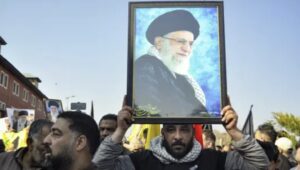
The killing of Iran’s Supreme Leader Ayatollah Ali Khamenei may not deliver the regime shock that Washington and Tel Aviv seek, strategic affairs expert Brahma Chellaney has warned, arguing that the strike could instead strengthen Tehran’s hand.
Brahma Chellaney, Professor of Strategic Studies at the Centre for Policy Research in New Delhi, said revenge is deeply rooted in both Sunni and Shiite traditions. By targeting Khamenei, he said, US President Donald Trump and Israeli Prime Minister Benjamin Netanyahu may have made their regime-change objective “more complicated and challenging.”
Martyrdom, mourning and mobilisation
In a detailed assessment posted on X, Chellaney said Khamenei’s death feeds directly into Shiite ideas of martyrdom and resistance. He argued that “in Shiite political culture, the killing of a supreme leader by foreign forces is immediately filtered through the Ashura narrative — the martyrdom of Imam Hussein at Karbala”.
“What might otherwise have been a leadership decapitation is thus recast as sacred sacrifice,” he added.
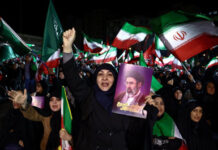
With Iran declaring 40 days of national mourning and describing Khamenei’s death as shahadat, the regime is invoking the principle of “mazloumiat”, the virtue of being the oppressed. According to Chellaney, grief is being turned into political energy.
“The blood of the martyr demands justice,” he said, warning that dissent can now be portrayed as siding with those responsible for the killing.
He added that such a dynamic reduces the likelihood of swift regime collapse. Instead of weakening the system, he suggested, leadership decapitation risks pushing Iran toward a more openly “militarised theocracy”.
Regime change, Chellaney noted, depends on “delegitimizing the ruling order in the eyes of its own people. But by unleashing the revenge factor, Trump and Netanyahu have shortsightedly handed Tehran a unifying grievance powerful enough to override internal fractures. Instead of accelerating collapse, the strike risks consolidating the regime.”
Ultimately, he said, the outcome will depend on whether the regime’s use of martyrdom as a political tool outweighs public fatigue with ideological rule.
Escalation rhetoric grows sharper
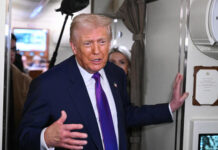
His remarks come as tensions spike further. US President Donald Trump warned Iran against further retaliation, saying Washington would respond with a “force that has never been seen before” if Tehran escalates military action.
“Iran just stated that they are going to hit very hard today… They better not do that,” Trump said.
Meanwhile, Iran’s Islamic Revolutionary Guard Corps (IRGC) has vowed what it called a “most ferocious offensive operation in history” against the US and Israel. In a statement on its official Telegram channel, the IRGC said the “hand of revenge” would not relent and pledged a “lesson-giving punishment” for those it described as aggressors.
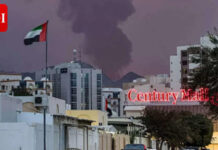
The IRGC said it had launched the fifth wave of Operation True Promise 4, targeting American-linked vessels and bases in the region. It claimed that an ammunition-carrying vessel at Jebel Ali anchorage was struck by drones and put out of service. It also said the American naval base in Kuwait’s Abdullah Al-Mubarak region was hit by ballistic missiles and drones, alleging heavy damage and casualties.
Independent confirmation of those claims was not immediately available.
Khamenei’s death, confirmed by Iranian state television, has marked a decisive moment in Iran’s 46-year-old Shia theocratic system.
Courtesy/Source: The Statesman