
























































































MAY 6, 2026
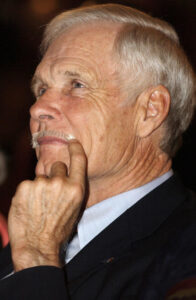
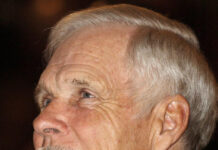
Ted Turner in 2005. – MANPREET ROMANA, AFP/Getty Images
Ted Turner, the maverick businessman and philanthropist who turned a financially struggling Atlanta TV station into a media empire around CNN, the first 24-hour cable news station, has died. He was 87.
Turner Enterprises announced his death in a news release obtained by USA TODAY on May 6, sharing that Turner died “surrounded by his family.”
The garrulous broadcast entrepreneur, known as “The Mouth of the South,” sold his father’s successful billboard business to purchase Atlanta independent station WJRJ channel 17 in 1970. Turner expanded that purchase into Turner Broadcasting System, or TBS, which included Turner Network Television, or TNT, and the groundbreaking 24-hour news channel Cable News Network, or CNN, which launched its nonstop news coverage in 1980.
“Ted was an intensely involved and committed leader, intrepid, fearless and always willing to back a hunch and trust his own judgement,” Mark Thompson, chairman and CEO of CNN Worldwide, said in a statement. “He was and always will be the presiding spirit of CNN. Ted is the giant on whose shoulders we stand, and we will all take a moment today to recognize him and his impact on our lives and the world.”
Turner was the longtime, colorful owner of both the Atlanta Braves professional baseball team and Atlanta Hawks professional basketball team – teams that provided key content for his TV super-station WTCG, and which earned both teams a nationwide following. The one-time cellar-dweller Braves became known as America’s Team and eventually dominated the National League in the 1990s under Turner’s ownership, including a 1995 World Series victory.
Turner was the epitome of the swaggering business titan and sportsman, known for hunting, drinking rum and arguing politics with his friend, the late Cuban president Fidel Castro. Turner’s obsessive dive into yachting and the America’s Cup yacht race earned him the media-dubbed title of “Captain Outrageous.”
Yet, the amateur skipper led his yacht to improbable victory in the 1977 America’s Cup and was eventually inducted into the National Sailing Hall of Fame in 2011.
Outspoken in politics, Turner founded and sponsored the Goodwill Games, which lasted from 1986 to 2001: international games started in the hopes of easing Cold War tensions through friendly athletic competition.
Turner is survived by his five children, 14 grandchildren and two great-grandchildren. “A private family service is planned, and a public memorial will be held at a later date, with details to follow,” Turner Enterprises said in its statement.
Ted Turner and Jane Fonda: The media mogul and actor-activist’s unlikely romance
A star in his own right, Turner wed activist-actor Jane Fonda in 1991, his third marriage. The unlikely union lasted 10 years and the mutual admiration between the two famed figures never diminished.
“I will never love anyone like I love him,” Fonda said of her one-time husband Turner years after they divorced in 2001.
The Turner legend started with ‘high goals’ and Brown University departure
Born Robert Edward Turner III on Nov. 19, 1938, in Cincinnati, Turner was inspired by his billboard magnate father, Robert Edward Turner II.
“He told me something I’ve never forgotten. He said, ‘Son, be sure to set goals so high you couldn’t possibly achieve them in one lifetime. That way you’ll always have something ahead of you,” Turner wrote in his 2008 memoir, “Call Me Ted: My Life, My Way.”
He lived up to that ethos, despite a rebellious youth and an early departure from Brown University. Turner lore suggested the college student was expelled from the Ivy League school for having a female student in his dormitory room. Turner insisted the visit did not get him expelled. “It is true I got caught and suspended, but I was already preparing to leave,” Turner wrote in his memoir.
He returned home and took over the Atlanta-based family business, Turner Advertising Co., at age 24 following his father’s death by suicide in March 1963. He ambitiously expanded to radio station ownership and then TV stations. The rise of CNN, which exploded to ubiquity with its wall-to-wall coverage of the 1991 Gulf War, made Turner a media megastar, earning him Time magazine’s 1991 Man of the Year.
“CNN, once derided as the ‘Chicken Noodle Network’ for its low wages and amateurish presentation, is now the video medium of record,” the Time magazine cover story stated.
The TBS network included the creation of the 24-hour Cartoon Network (1992) and Turner Classic Movies (1994). TCM consisted mainly of classic theatrically released feature films from the Turner Entertainment film library, which were enhanced by Turner’s once-criticized acquisition of the pre-1986 MGM film library and Warner Bros. studio films made until 1950.
Turner also oversaw the purchase of two motion-picture production companies, New Line Cinema and Castle Rock Entertainment, in 1993.
“Ted’s entrepreneurial spirit, creative ambition and willingness to take risks changed the media industry forever,” David Zaslav, CEO and president of Warner Bros. Discovery, wrote in a May 6 statement. “He believed deeply in the power of ideas, in doing things differently and in building platforms that could inform, inspire and connect people around the world. That belief inspired generations of leaders, myself included. He did not just disrupt media. He transformed it.”
Turner lost $8 billion after disastrous AOL-Time Warner merger
In 1996, the media giant Time Warner Inc. merged with Turner Broadcasting System, making Turner vice-chairman, a position he kept when Time Warner merged with internet giant AOL in 2001. The dot-com crash was disastrous for the company and Turner, the largest individual shareholder in the combined company.
“I lost 80% of my worth and subsequently lost my job,” Turner told The New York Times in 2010. “We looked it up to see if I was the biggest loser of all time because I lost about $8 billion. But I don’t think I was the biggest loser.”
Turner focused on his already impressive philanthropic efforts. In 1997, the businessman shocked diplomats at a black-tie gala by announcing the donation of a staggering $1 billion to the United Nations to benefit programs aiding refugees and children. He was an outspoken environmentalist, funding conservation programs through his Turner Foundation.
How much land did Ted Turner own?
Turner was the second-largest individual landowner in North America, owning approximately 2 million acres of land that included bison-filled ranch land spanning eight U.S. states (and Argentina). The land is managed by Turner Enterprises with the goal of governing in “an economically sustainable and ecologically sensitive manner while promoting the conservation of native species.”
Ted Turner’s Lewy body dementia battle
The seemingly tireless entrepreneurial icon’s hard-charging ways took a setback as Turner revealed in 2018 that he was suffering from the progressive neurological disorder Lewy body dementia. Turner told “CBS Sunday Morning” the disorder left him “tired” and “exhausted,” adding that the chronic symptom that bothered him most was “forgetfulness.”
As for his legacy, the outspoken Turner wrote in his memoir that he often considered what he would write on his own tombstone, starting with the press-baiting comment, “You Can’t Interview Me Here.”
“In the middle of my career, I considered, ‘Here Lies Ted Turner. He Never Owned a Broadcast Network,'” Turner wrote in his memoir. “These days, I’m leaning toward, ‘I Have Nothing Left to Say.'”
In his illustrious lifetime, Turner said plenty.
“If I had to live my life over there are things I would do differently,” Turner wrote. “But it’s been a remarkable ride. I have very few regrets.”
Courtesy/Source: This article originally appeared on USA TODAY