

















































































DECEMBER 1, 2025

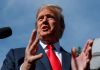
Donald Trump speaks with the press aboard Air Force One en route to Washington, D.C., on November 30.
President Donald Trump has suggested his administration is exploring whether it has the legal authority to revoke U.S. citizenship from naturalized immigrants who have been convicted of crimes, following last week’s National Guard shooting.
Speaking with reporters aboard Air Force One on November 30, Trump linked the review to what he described as gaps in the current naturalization and vetting system.
“We have criminals that came into our country, and they were naturalized,” Trump said, adding, “If I have the power to do it—I’m not sure that I do, but if I do—I would denaturalize. Absolutely.”
Amelia Wilson, assistant professor of law and director of the Immigration Justice Clinic, told Newsweek that the president does not have the authority to revoke citizenship on their own. Denaturalization can happen only through a court order, and the individual affected must be afforded full due process.
Why It Matters
Rahmanullah Lakanwal, 29, has been charged with shooting two West Virginia National Guard members near the White House on November 26, killing U.S. Army Specialist Sarah Beckstrom, 20, and critically injuring U.S. Air Force Staff Sergeant Andrew Wolfe, 24. Lakanwal, an Afghan national who entered the U.S. in 2021 under humanitarian parole, was granted asylum this year under the Trump administration. His green card application was still pending at the time of the attack.
The shooting has prompted the Trump administration to reassess immigration policies and tighten scrutiny of naturalized citizens and green card holders. U.S. Citizenship and Immigration Services (USCIS) has announced that it will suspend all processing concerning Afghan nationals indefinitely, pending further notice. The Department of Homeland Security has also ordered a comprehensive review of all green cards issued to immigrants from countries deemed high-risk.
What To Know
Trump’s government argues that the Biden administration improperly managed refugee and asylum programs during a period of historically high migration, especially along the southern border.
The refugee program is currently undergoing a comprehensive review, and individuals determined to have been admitted improperly could face the revocation of their status. Authorities noted that the suspect accused of shooting two National Guard members in Washington was among about 76,000 Afghan nationals who entered the United States in 2021 following the U.S. withdrawal and the Taliban’s takeover.
Trump emphasized that any effort to revoke citizenship would apply only to naturalized individuals convicted of crimes, and that such measures would depend on the limits of presidential authority. Officials have not yet provided specific details on which cases might be pursued or how the administration would determine eligibility.
“Under current U.S. law, the only lawful mechanism for revoking citizenship from naturalized citizens, known as denaturalization, is if it was unlawfully obtained—typically through fraud, willful misrepresentation or concealment of disqualifying facts during the immigration or naturalization process. Criminal convictions occurring after naturalization, by themselves, generally do not provide legal grounds for revocation,” Wilson said.
The government can only pursue a person’s denaturalization if there is sufficient evidence that the individual either procured citizenship through fraud or willful misrepresentation, or if they did so “illegally” (meaning, they never statutorily qualified in the first place).
Expanding denaturalization to include post-naturalization criminal activity would represent a significant departure from current practice and would likely face legal challenges in federal courts. U.S.-born citizens, persons who acquired citizenship by birth rather than naturalization, cannot be stripped of their citizenship under denaturalization laws.
The Department of Justice is turning its attention to pursuing the denaturalization of U.S. citizens. In a June 11 memo, Assistant Attorney General Brett A. Shumate said denaturalization would be one of the civil division’s top enforcement priorities.
What People Are Saying
Wilson told Newsweek: “Denaturalization can only occur pursuant to a court order, and only after the impacted person is guaranteed the full due process of law. The United States Immigration and Citizenship Services must first refer the individual for denaturalization to either the Attorney General (for civil denaturalization) or a federal district court (for criminal denaturalization). The government bears a high burden of proof to establish that denaturalization is warranted.”
President Donald Trump said aboard Air Force One on November 30: “We have enough problems. We don’t want those people.”
Jon Favreau, an Obama-era White House staffer, wrote on X on November 28: “The President says that he will revoke the *citizenship* of Americans who weren’t born here if he and @StephenM determine decide they need to go. Denaturalization is a rare and legally difficult process that Miller and white nationalists like Nick Fuentes have been pushing to ‘supercharge’ the process for years now. But as Trump makes clear by citing the number 53 million—which includes foreign-born CITIZENS—any American who wasn’t born here is now, at least in the eyes of the government, at risk of deportation.”
What Happens Next
USCIS and other immigration agencies may continue suspending or scrutinizing applications from individuals from high-risk countries while policy reviews are underway.
Courtesy/Source: Newsweek