
























































































OCTOBER 1, 2025
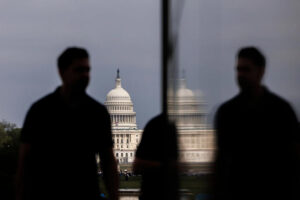
US Government Shutdowns usually strike federal employees in the form of furloughs, with pay delayed until the government reopens. – Aaron Schwartz/Bloomberg News
The federal government shutdown began at 12:01 a.m. Wednesday after Democrats and Republicans failed to reach a deal on a short-term spending plan.
Shutdowns can squeeze the economy in different ways, from missed paychecks for hundreds of thousands of federal employees to the delayed release of crucial economic indicators. But duration matters. The longer the closure lasts, the greater the hit to economic growth and the work of businesses that rely on the federal government’s daily functioning.
Shutting down the government comes at a delicate time for the U.S. labor market, which spent the summer stuck in a stall pattern because of slow hiring. Without government data personnel on hand, economists and investors aren’t expected to get the next big indicator on Friday, when the September jobs report is due.
What happens to federal employees?
The effect on the federal workforce is important, because hundreds of thousands of employees who aren’t getting regular paychecks are less likely to spend money on goods and services.
Typically, shutdowns lead to unpaid furloughs. A 2019 law guarantees back pay once the shutdown concludes, so an important question for the economy is how many workers are on the sidelines, and for how long, without regular pay.
President Trump’s threats of mass federal layoffs could leave a more lasting mark by making furloughed employees more nervous to spend. The federal workforce has already been hit by months of workforce reductions, restructurings and rehirings.
Senate Minority Leader Chuck Schumer (D., N.Y.) has called an Office of Management and Budget plan to prepare for firings an “attempt at intimidation” and questioned whether any firings would hold up in court.
The Congressional Budget Office has estimated that about 750,000 federal employees could be furloughed in a shutdown. Pay would also be delayed for federal employees who remain at work, such as members of the military.
What happens to Friday’s jobs report?
The Bureau of Labor Statistics said it won’t release or collect any economic data during a shutdown, putting Friday’s planned monthly jobs report at risk. The Labor Department’s monthly inflation report, which comes out in mid-October, could also be affected depending on how long the shutdown lasts.
Weekly jobless claims, which are collected at the state level, will not be released during a shutdown, the Labor Department said.
Delays to economic reports will put the spotlight on other data releases, such as payroll processor ADP’s monthly report on private-sector employment. ADP’s latest report, released Wednesday, showed that the U.S. lost 32,000 private sector jobs in September—missing an expected increase of 45,000 jobs among economists polled by The Wall Street Journal.
Federal Reserve readings, such as the monthly report on industrial production, are expected to continue because the Fed isn’t funded by Congress.
Postponed reports would be released after the shutdown, once they have been compiled. But data quality could suffer. This is particularly the case with the inflation report, because the people the Labor Department depends on to check prices on store shelves and elsewhere are furloughed while the government is shut down. The department’s contingency plan calls for just one BLS employee—the acting commissioner—to work through the shutdown.
What happens to private businesses?
Companies that depend on the daily functioning of the government could lose business or face delays in vital approvals. During the 2013 shutdown, defense contractor Lockheed Martin furloughed 3,000 employees who worked in government facilities or relied on government inspectors to complete their work.
At the time, the federal government also stopped issuing permits for drilling on federal lands; export certifications for beer, wine and spirits; and loans to small businesses, homeowners and developers. Without payment, small businesses that contracted with the federal government temporarily cut staff and reduced operations.
The 2013 shutdown ultimately cut private-sector job growth by about 120,000 jobs, according to an estimate from the Council of Economic Advisers. Shutdowns can also hit the life-sciences industry through delayed grants and stalled Food and Drug Administration reviews.
What happens to economic growth?
Shutdowns reduce government spending and programs, depressing activity as a result. Goldman Sachs estimates that a shutdown would shave about 0.15 percentage point off annualized fourth-quarter gross domestic product growth for each week it persists. Deutsche Bank puts that figure at 0.2 percentage point.
The 34-day partial government shutdown in 2018 and 2019 reduced annualized real gross domestic product growth by 0.4 percentage point in the first quarter of 2019, the Congressional Budget Office estimated. A full shutdown could more closely mirror the effects of the 16-day 2013 funding lapse, which lowered annualized growth by as much as 0.6 percentage point, the OMB reported.
Economists say the economy generally makes up for any lost growth in a shutdown once the government reopens.
What happens to travel and tourism?
The travel economy could lose $1 billion every week in a shutdown, the U.S. Travel Association warned in a letter to congressional leadership last week. Worries about airport delays or national-park closures can curb travel plans.
Most Transportation Security Administration employees and air-traffic controllers will work without pay, according to plans published by the Homeland Security and Transportation departments. But prior shutdowns still caused problems: In 2019, many TSA staffers called in absent from work, closing security checkpoints and causing delays at some airports.
The National Park Service plans to keep roads, trails and memorials generally open, according to a new contingency plan posted Tuesday. Parks that collect visitor fees at entrance gates will use those balances to help provide visitor services, such as collecting trash and maintaining restrooms.
This explanatory article might be updated periodically.
Corrections & AmplificationsThe partial government shutdown in 2018 and 2019 reduced annualized real GDP growth by 0.4 percentage point in the first quarter of 2019, the CBO estimated. An earlier version of this article incorrectly said the reduction was 0.4%. In addition, the 2013 funding lapse lowered annualized growth by as much as 0.6 percentage point, according to the OMB. That figure in an earlier version was given as 0.6%. (Corrected on Oct. 1)
Courtesy/Source: WSJ