




















































































NOVEMBER 9, 2026
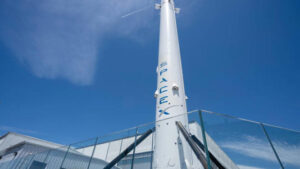
SpaceX has held discussions with tower companies about access to roughly 80,000 sites across the country. hapabapa / Getty Images
The U.S. wireless industry spent decades building something that was designed not to be easily replicated. Spectrum, i.e. radio frequency, licenses came through regulatory proceedings measured in years. Tower networks required billions of dollars in long-term leases and site agreements across hundreds of thousands of private parcels of land.
Space X CEO Elon Musk has spent roughly two years buying the same kinds of assets. SpaceX has acquired roughly $17 billion in spectrum and reached a separate agreement to buy another major block of airwaves. It has also held talks with tower companies about site access across the country.
At the Baron Investment Conference on Nov. 6, Musk appeared by video and said something that sent telecom stocks moving in opposite directions within hours. The remark was brief and conditional. Its implications were not.
What Musk said and what it moved
Musk said SpaceX could acquire a legacy wireless carrier and use its licensed airwaves more efficiently than the current owner. He named no target, filed no paperwork and made no commitment to a timeline. The phrasing ruled nothing out.
“We could just acquire that legacy telco and use their spectrum, you know, ten times more effectively,” Musk said at the Baron Investment Conference.
T-Mobile (TMUS) rose 0.88% on Nov. 6., and Verizon (VZ) and AT&T (T) each slipped roughly 0.89%.
SpaceX shares climbed 8.62% to $134.27, though the stock had declined 19.89% over the prior month during a broader market pullback.
T-Mobile shares have fallen 18.46% year to date, partly because investors are already pricing in some probability of a fourth major competitor. The company reported third quarter earnings per share of $3.22 against a $2.89 estimate and revenue of $23.6 billion against $23.1 billion expected. It raised full-year core adjusted EBITDA guidance to $37.35 billion to $37.45 billion and announced a 15% dividend increase to $1.17 per share, payable Dec. 10.
What SpaceX already controls
A company needs the legal right to use specific frequency bands, or it cannot operate as a cellular provider for most consumers. SpaceX spent roughly $17 billion acquiring AWS-4 and H-block licenses from EchoStar in a deal announced in September 2025, structured as $8.5 billion in cash and $8.5 billion in SpaceX stock.
SpaceX has also agreed to acquire a portfolio of nationwide 800 MHz licenses, with that deal expected to close in the first half of 2027. Reports of SpaceX holding discussions about Boost Mobile, the prepaid brand that came with the EchoStar deal, have not been confirmed by the company.
Deutsche Telekom CEO Tim Höttges put SpaceX’s total spectrum holdings at roughly 79 MHz of low- and midband airwaves on Deutsche Telekom’s Nov. 5 earnings call. He described that position as a “dirt track” compared with T-Mobile’s approximately 400 MHz “autobahn” and said the company is taking SpaceX’s entry seriously.
Musk has argued that SpaceX can close that gap by combining satellite coverage with direct-to-cell technology and a different network architecture. SpaceX already provides a direct-to-cell satellite service in limited markets through a partnership with T-Mobile –– a live test of the concept behind his efficiency argument. If SpaceX can use a legacy carrier’s spectrum far more cost-effectively, acquiring one becomes more effective, more quickly, than building a competing network from scratch.
Why acquiring a carrier is harder than it sounds
Höttges said at the Nov. 5 earnings call that SpaceX would need at least $200 billion to compete with the established U.S. carriers. That figure covers spectrum, towers, backhaul and the full operational costs of running a national wireless business. Spectrum alone does not make a carrier.
A carrier acquisition would transfer assets and liabilities at the same time. AT&T disclosed $159.6 billion in total debt as of Sept. 30, 2026. Verizon reported $136.1 billion in unsecured debt alone as of the same period. Any buyer would absorb those obligations alongside the spectrum, customers and tower leases.
SpaceX has held discussions with tower companies about access to roughly 80,000 sites across the country, a footprint that would roughly match the scale of the existing carrier networks. Tower leasing carries recurring costs that compound regardless of how efficiently SpaceX uses its spectrum.
Any deal involving a major U.S. carrier would require Federal Communications Commission review and antitrust clearance. No U.S. carrier acquisition at that scale has moved through the bureaucratic hurdles quickly. The FCC also controls spectrum license transfers, which are central to any such deal’s value.
The T-Mobile and Sprint merger review took more than two years from announcement to close. A SpaceX deal involving AT&T or Verizon would draw substantially heavier scrutiny from regulators and existing carriers alike.
The next milestone
The 800 MHz license closing expected in the first half of 2027 is the next concrete step in SpaceX’s wireless strategy. Those frequencies cover long distances and penetrate buildings more reliably than higher-band spectrum. If that deal closes on schedule, SpaceX will hold three separate blocks of spectrum, spanning the low and mid bands a national carrier needs.
Until SpaceX files a formal acquisition notice with regulators, Musk’s Baron Conference remarks remain strategic signaling rather than a live transaction. The EchoStar deal took months from announcement to close. A carrier acquisition at the scale of AT&T or Verizon would likely rank as one of the largest corporate transactions in U.S. history.
T-Mobile answered investor concern about SpaceX with a Q3 earnings beat. Its Q3 beat on earnings and revenue, its raised EBITDA guidance, and its dividend increase were together directed at a shareholder base that is pricing in a fourth competitor. The carriers are spending and positioning themselves as though one is coming.
Space X’s 800 MHz closing in the first half of 2027 and any formal M&A filing before the end of that year are the two markers investors are watching. Neither has happened yet.
Courtesy: The article was originally appeared on theStreet