
















































































SEPTEMBER 30, 2026
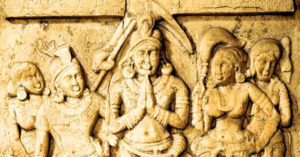
Ancient World History: Sanskrit Language
People around the world speak about 7,100 languages today. Some languages, such as Tamil and Sanskrit, have been around for thousands of years. Others, like Afrikaans, are much newer, appearing only about 350 years ago. Many people say Mandarin is one of the hardest languages to learn, while Spanish is often seen as one of the easiest. Languages also have nicknames. For example, Italian is called the “Language of Music”, and French is known as the “Language of Love”. But do you know which specific language is considered the “Mother of all Indo-Aryan languages”? In this article, we’ll take a look at the history and mystery of ancient Indian speech.
Which Language Was Spoken In Ancient India?
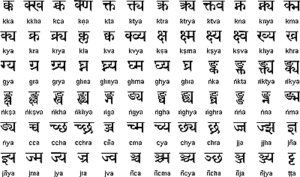
Ancient World History: Sanskrit
Sanskrit is often called the “Mother of all Languages.” The name comes from Saṃskṛta, which means ‘refined’ or ‘well-constructed’. In ancient India, Sanskrit became the main language for scholars and religious ceremonies around 1500 BCE. Most people spoke local dialects called Prakrits, but Sanskrit was used for science, philosophy, and religion.
It was spoken throughout the Indian subcontinent, from the Himalayas to the southern coasts, and helped scholars from different regions communicate with one another. Today, Sanskrit is still used in Hindu religious ceremonies, and about 25,000 people speak it as their main language in villages like Mattur.
7+ Lesser-known Facts About Sanskrit
- Sanskrit grammar, codified by Pāṇini in the 4th Century BCE, is so logical and rule-based that it is considered highly compatible with the structure of computer algorithms.
- Scientific studies suggest that chanting Sanskrit mantras can increase grey matter in the brain, a phenomenon known as the “Sanskrit Effect”.
- A report by NASA scientist Rick Briggs stated that Sanskrit is one of the most suitable natural languages for Artificial Intelligence due to its lack of ambiguity.
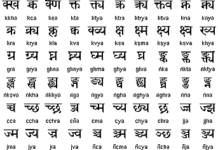
- The language uses 50 letters (vowels and consonants) that engage all parts of the mouth, which is believed to stimulate various nerve points in the body.
- Vedic Sanskrit, found in the Rigveda, is one of the oldest attested members of the Indo-European language family.
- Over 50% of the words in many modern Indian languages and many English words (like Mother from Matr or Triangle from Trikona) share roots with Sanskrit.
- Unlike English, where spelling doesn’t always match sound, Sanskrit is phonetic; it is written exactly as it is spoken.
- The tradition of Vedic chanting in Sanskrit is recognised by UNESCO as a Masterpiece of the Oral and Intangible Heritage of Humanity.
List of Languages That Were Spoken By Ancient Indians
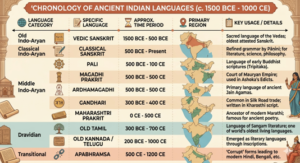
Ancient Indian Infographic
When looking at the languages of ancient India, it helps to group them by when, where, and how they were used. Sanskrit was spoken by the elite and scholars, while different Prakrits were the everyday languages of the people.
Languages of Ancient India (c. 1500 BCE – 1000 CE)
Here is a tabulated list of the primary languages spoken in ancient India:
| Language Category | Specific Language | Time Period (Approx.) | Primary Region | Key Usage / Details |
| Old Indo-Aryan | Vedic Sanskrit | 1500 BCE – 500 BCE | North & Northwest India | Used for the Vedas, the oldest form of Sanskrit. |
| Classical Indo-Aryan | Classical Sanskrit | 500 BCE – Present | Entire Subcontinent | Refined by Pāṇini; used for literature, math, and science. |
| Middle Indo-Aryan | Pali | 500 BCE – 100 CE | Bihar & Central India | The language of early Buddhist scriptures (Tripitaka). |
| Middle Indo-Aryan | Magadhi Prakrit | 500 BCE – 500 CE | Eastern India (Magadha) | Used in the court of the Mauryan Empire and by Ashoka. |
| Middle Indo-Aryan | Ardhamagadhi | 500 BCE – 500 CE | Central India | The primary language used for the ancient Jain Agamas. |
| Middle Indo-Aryan | Gandhari | 300 BCE – 400 CE | Northwest (Gandhara) | Written in the Kharosthi script, common on the Silk Road. |
| Middle Indo-Aryan | Maharashtri Prakrit | 0 CE – 500 CE | Western/Central India | The ancestor of modern Marathi is famous for its ancient poetry. |
| Dravidian | Old Tamil | 300 BCE – 700 CE | South India (Tamilakam) | Used in the Sangam literature, one of the world’s oldest living languages. |
| Dravidian | Old Kannada / Telugu | 200 BCE – 1000 CE | South/Central India | Emerged as distinct literary languages through inscriptions. |
| Transitional | Apabhramsa | 500 CE – 1200 CE | North India | The “corrupt” or “decayed” forms of Prakrit that led to modern Hindi, Bengali, etc. |
Key Highlights
- In ancient India, society used two main levels of language. Sanskrit served as the formal language for writing and rituals, while Prakrits, which means “natural” or “common”, were the everyday spoken languages.
- Most of these languages were first written in the Brahmi script, an ancestor of nearly all Indian scripts, or in the Kharosthi script.
- By the middle of the first millennium CE, there were many regional Prakrit dialects. However, they all shared a similar grammatical base with Sanskrit.
Courtesy: Jagran Josh